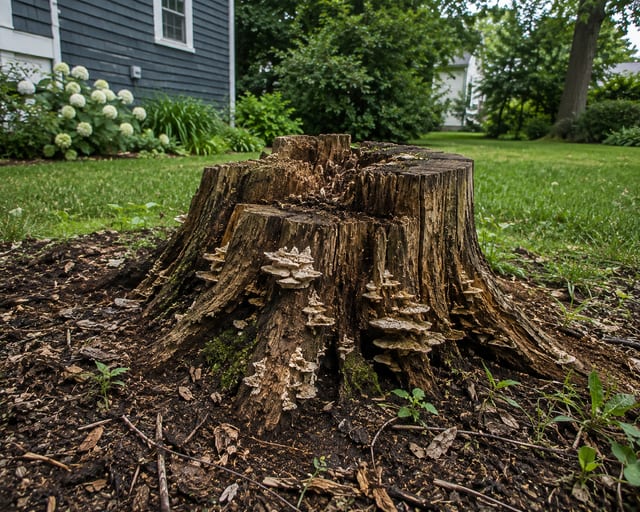
Trees that may struggle in compacted urban soil in Grand Rapids, MI, include sugar maples, eastern white pines, tulip trees, and flowering dogwoods. Compacted soil restricts root growth and reduces the movement of air and water through the ground. These conditions can contribute to poor growth and premature decline, particularly when a tree grows in an unsuitable location.
Grand Rapids has a mix of established neighborhoods, commercial developments, and residential properties with paved surfaces. Trees growing in these environments can face challenges that woodland trees may avoid. Driveways, sidewalks, construction equipment, and repeated foot traffic can compress the soil around their roots.
Understanding how soil compaction affects different tree species can help homeowners make better planting decisions, recognize signs of stress, and reduce the risk of premature tree decline.
Understanding the Mechanics of Soil Compaction
Healthy soil contains mineral particles, organic matter, water, and air. The spaces between soil particles, known as pores, allow oxygen to reach roots and help water move through the ground. These spaces also support organisms that contribute to soil health.
According to Michigan State University Extension, soil conditions play an important role in plant growth. When soil becomes compacted, its structure changes, and roots may struggle to access the resources they need.
- Reduced pore space: Soil compaction occurs when pressure pushes soil particles closer together. Heavy machinery, construction activity, and repeated foot traffic can reduce the spaces that normally hold air and water.
- Restricted root growth: Dense soil makes it harder for new roots to penetrate the surrounding ground. This can limit the area from which a tree obtains water and nutrients.
- Poor water movement: Compacted soil may absorb and drain water more slowly. Depending on the soil type and site conditions, water can collect near the surface or around roots.
- Reduced oxygen availability: When air-filled pores become limited, roots may not receive enough oxygen for normal growth and function.
- Greater stress on young trees: Newly planted trees have developing root systems. Compacted ground can restrict root expansion and make establishment more difficult.
The severity of these problems depends on soil texture, moisture, compaction depth, drainage, and tree species. Understanding these factors helps property owners identify potential problems before they contribute to more serious decline.
The University of Minnesota Extension’s guide to soil compaction provides additional information about how compaction affects soil structure and water movement.
Why Compacted Soil Can Harm Certain Trees
Tree roots need oxygen, moisture, and suitable growing space. When compacted soil restricts these resources, a tree may struggle to maintain healthy growth.
The effects are not always immediately visible. A tree may initially retain a full canopy while its roots experience increasingly difficult growing conditions. Over time, stress can appear as smaller leaves, sparse foliage, reduced growth, premature leaf drop, or dead branches.
Poor drainage can create additional problems. Roots growing in persistently waterlogged soil may experience oxygen deprivation, while trees in compacted areas may struggle to access water during dry periods.
Young trees are particularly vulnerable because their roots have not yet expanded into a larger area of soil. Mature trees can also decline when construction, paving, excavation, or repeated traffic damages their root zones.
Choosing an appropriate species is one part of prevention. Providing enough unpaved growing space, limiting traffic around roots, and managing water effectively can also support healthier urban trees.
Tree Species That May Struggle in Compacted Urban Soil
Some trees are less suited to heavily compacted planting sites than others. The following species can experience problems when soil conditions, drainage, or available root space do not meet their needs.
Their suitability depends on the planting location, local conditions, and the severity of compaction. None of these species will necessarily fail simply because they grow in an urban environment.
-
Sugar Maples (Acer saccharum)
Sugar maples are valued for their fall color and their role in Michigan’s natural landscapes. However, they generally perform best in suitable, well-drained soils with adequate space for root development.
- Restricted root growth: Dense soil can limit root expansion and reduce the volume of soil available for water and nutrient uptake.
- Salt exposure: Sugar maples can be sensitive to road salt. Trees planted beside busy streets or sidewalks may face additional stress when salt accumulates in the soil or splashes onto foliage.
- Reduced vigor: When compaction combines with poor drainage, restricted root space, or other environmental stresses, a sugar maple may develop sparse foliage, reduced growth, or leaf scorch.
Property owners considering sugar maples for front yards or street-side planting areas should evaluate soil conditions and the amount of available root space before planting.
-
Eastern White Pine (Pinus strobus)
Eastern white pine is a Michigan native evergreen that can grow into a large tree. It generally benefits from adequate root space and soil conditions that provide suitable drainage.
- Drainage concerns: Persistent waterlogging can limit oxygen availability around the roots and contribute to root problems.
- Restricted root development: Compacted soil can prevent roots from spreading normally, potentially affecting the tree’s ability to establish and remain stable.
- Additional environmental stress: Poor growing conditions can make an already stressed tree less resilient to other environmental pressures.
Eastern white pine may not be the right choice for a site with severe compaction and persistent drainage problems. Property owners should assess the planting area before selecting this species.
-
Tulip Trees (Liriodendron tulipifera)
Tulip trees are known for their rapid growth, large mature size, and distinctive spring flowers. These characteristics make them attractive to property owners who want a substantial shade tree.
However, a tulip tree needs sufficient room for its roots and canopy to develop.
- Limited rooting space: Compacted soil can restrict root expansion, particularly in small planting beds surrounded by pavement.
- Water stress: Poor soil structure can interfere with water movement and make moisture availability less predictable.
- Structural concerns: A tree growing in restricted or unsuitable conditions may develop poorly. Its stability depends on several factors, including root development, soil conditions, and the tree’s overall structure.
Before planting a tulip tree, consider its mature size, the available soil volume, and its distance from buildings and paved surfaces. Property owners can also review our article on the benefits and risks of fast-growing trees in Grand Rapids, MI when comparing tree choices.
-
Flowering Dogwood (Cornus florida)
Flowering dogwoods are valued for their spring blossoms and relatively compact size. They generally prefer suitable, well-drained soil and conditions that support healthy root development.
- Shallow root systems: Compacted soil near the surface can restrict root growth and make it difficult for the tree to access sufficient moisture and nutrients.
- Heat from surrounding surfaces: Sidewalks, driveways, and other paved areas can increase local temperatures and place additional stress on trees.
- Poor drainage: Persistently wet soil can create unfavorable conditions for roots and contribute to decline.
Dogwoods may struggle when planted in small, heavily compacted spaces beside concrete or asphalt. Selecting an appropriate planting location and maintaining suitable soil conditions can improve their chances of establishing successfully.
How to Address Soil Compaction in Grand Rapids, MI
If established trees are growing in compacted soil, the first step is to identify the extent of the problem and determine whether other factors are contributing to the symptoms.
Soil improvement methods should match the site conditions. Aggressive digging or tilling around an established tree can damage roots, so property owners should avoid disturbing the root zone without understanding the potential consequences.
Consider these practical steps:
- Limit traffic around tree roots: Avoid repeatedly walking, parking, or storing heavy materials beneath a tree’s canopy, especially when the soil is wet.
- Protect soil during construction: Keep heavy equipment away from tree protection zones wherever possible. Construction-related compaction can affect roots even when the trunk remains untouched.
- Apply an appropriate mulch layer: Organic mulch can help moderate soil temperature, retain moisture, and gradually contribute organic matter as it decomposes. Keep mulch away from direct contact with the trunk.
- Manage drainage: Investigate persistent puddling or waterlogged soil rather than assuming that a tree needs more water.
- Avoid unnecessary soil disturbance: Repeated tilling can damage roots and disrupt soil structure. Do not add sand or other amendments without understanding the soil’s composition and the purpose of the treatment.
- Consider professional assessment: If a mature tree shows persistent decline, an arborist can evaluate its condition, growing environment, and potential risk factors before recommending a course of action.
Soil aeration or other root-zone treatments may be appropriate in some situations, but the correct method depends on the tree, soil type, and extent of compaction. Not every tree benefits from the same treatment.
Urban Soil Management Checklist
Use this checklist to identify possible soil problems around trees on your Grand Rapids property.
| Action Step | What to Look For or Do | Why It Matters |
|---|---|---|
| Check soil condition | Look for unusually hard ground, limited root penetration, or a surface that resists water absorption. | Helps identify possible compaction. |
| Monitor drainage | Observe whether water remains pooled after rainfall. | Persistent pooling may indicate drainage problems. |
| Inspect the canopy | Look for sparse foliage, premature leaf drop, dead branches, or reduced growth. | These symptoms may indicate stress, although they can have several causes. |
| Protect the root zone | Limit heavy traffic and equipment use near trees. | Reduces further soil compaction and root damage. |
| Apply mulch correctly | Spread an appropriate organic mulch layer without piling it against the trunk. | Helps moderate soil conditions and retain moisture. |
| Choose suitable species | Consider mature size, soil requirements, drainage, and available root space before planting. | Helps match trees to their growing environment. |
| Seek professional advice | Arrange an assessment when a tree shows persistent decline or structural concerns. | Helps identify the likely cause and suitable next steps. |
A simple hand test can provide clues about soil texture and moisture, but it cannot reliably diagnose compaction on its own. Soil condition, drainage, and tree health should be considered together.
How Big Chipper Tree Service Can Help
Soil compaction can contribute to tree stress, but declining foliage or slow growth may also result from drought, disease, pests, root damage, or unsuitable planting conditions. Identifying the likely cause is important before deciding what to do next.
Big Chipper Tree Service serves homeowners and property owners in Grand Rapids, MI, and throughout West Michigan. Our team provides professional tree services, including tree removal, emergency tree service, stump grinding, and other tree-related work.
If a tree growing in compacted soil shows signs of significant decline, a professional assessment can help determine whether the tree presents a safety concern and what options may be appropriate. Our team can discuss the condition of a hazardous or declining tree and whether removal may be necessary.
You can also read about what tree professionals notice that homeowners often miss to learn more about signs that may warrant a closer look.
Frequently Asked Questions (FAQ)
How can I tell if the soil in my yard is heavily compacted?
Hard ground, poor water infiltration, persistent puddling, and restricted root growth can indicate possible compaction. However, these signs can also result from soil texture or drainage issues. A simple hand test is not enough to confirm compaction, so consider a more thorough assessment if trees are showing signs of stress.
Can I mix sand into dense clay soil to improve drainage?
Adding sand directly to clay soil is not a reliable general solution. The result depends on the proportions and characteristics of the materials, and a small amount of sand may not improve the soil’s structure. Before adding amendments, assess the soil and identify the underlying drainage or compaction problem.
Which trees are suitable for compacted urban areas?
The right choice depends on the degree of compaction, soil moisture, available root space, sunlight, and the tree’s mature size. Some adaptable urban tree species may tolerate challenging conditions better than others, but no species should be considered suitable for every compacted site. Local guidance and site-specific assessment can help narrow the options.
Will watering my tree more frequently help it overcome soil compaction?
Not necessarily. Compacted soil may drain slowly, and excessive watering can worsen oxygen shortages around the roots. Check soil moisture and drainage before changing your watering routine. A tree growing in compacted soil may need improvements to its growing conditions rather than more water.
Can soil compaction kill a mature tree?
Severe or prolonged compaction can contribute to root stress and decline, especially when combined with poor drainage, construction damage, or drought. However, compaction does not automatically kill a tree. Its impact depends on the tree’s species, age, condition, and growing environment.
Should I remove a tree that is declining in compacted soil?
Not always. Some trees may benefit from changes to their growing conditions, while others may have extensive root damage, structural problems, or other conditions that make removal appropriate. A professional assessment can help determine whether the tree can remain safely or whether removal should be considered.
Do you provide tree services in Byron Center and Comstock Park, MI?
Yes, Big Chipper Tree Service serves communities throughout West Michigan, including the greater Grand Rapids area. We help property owners address hazardous trees, storm damage, and other tree service needs. Visit the Big Chipper Tree Service website to learn more about our service area and request an estimate.
Learn more about our tree services in Byron Center and tree services in Comstock Park, MI.