Serving West Michigan Homeowners and Property Owners
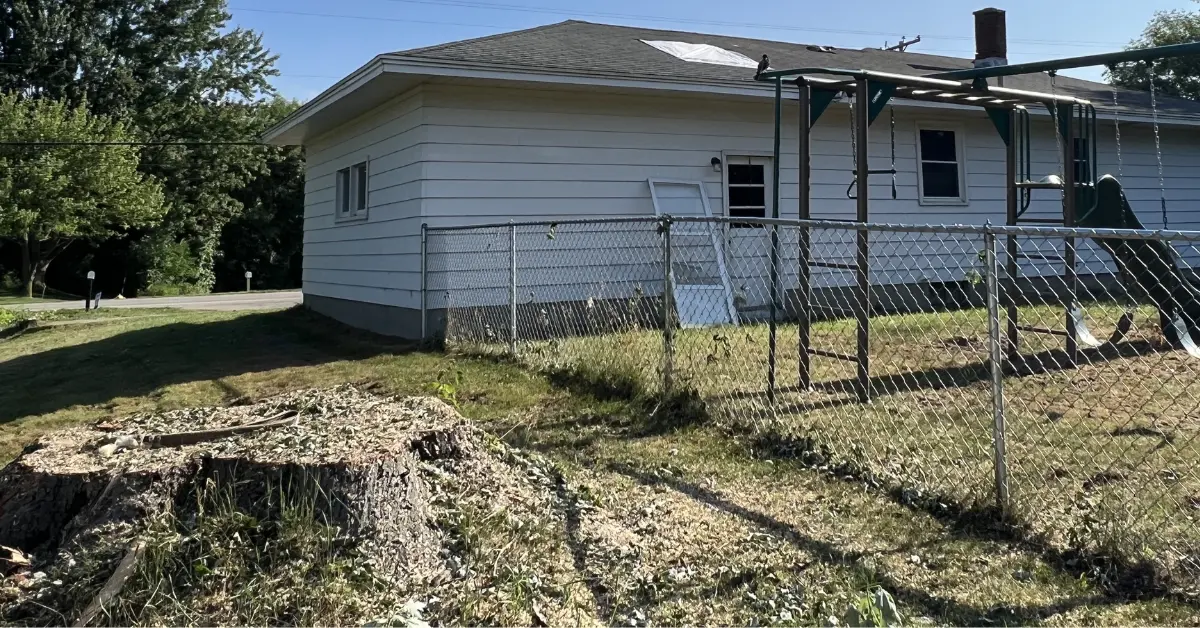
The tree is gone. But the stump is still there, sitting in the middle of your yard, catching your mower blade, tripping your kids, and quietly spreading root decay into the surrounding soil. Most homeowners put stump removal on the back burner after a tree comes down. Then six months later, they are looking at a sprouting ring of new growth shooting up from a root system that never stopped working.
Leaving a stump in the ground is rarely neutral. It is either a minor nuisance or an active problem, depending on the species, location, and how long it sits.
Big Chipper Tree Service handles stump grinding and full stump removal across Grand Rapids and West Michigan. We have the equipment to clear stumps of any size, in tight spaces or open yards, residential lots or rural properties. Free written estimates before any work begins.
Call (616) 300-1811 | Free Estimates | Stump Removal Across West Michigan
Grinding vs Full Removal: What Is the Difference and Which One Do You Need
This is the first question worth answering clearly because most homeowners are not sure which service they actually need.
Stump grinding uses a rotating cutting wheel to reduce the stump to wood chips below the surface grade. The machine works down eight to twelve inches into the ground, sometimes deeper on large stumps. What remains is a mix of wood chips and loose soil where the stump used to be. The root system stays in the ground and breaks down naturally over time. Grinding is faster, less disruptive, and costs less than full removal.
Full stump removal extracts the entire stump along with the primary root mass. This requires excavation around the stump, root cutting, and mechanical extraction. It is more invasive, takes longer, and leaves a larger hole to backfill. But it removes everything, roots included.
For most residential situations in Grand Rapids, grinding is sufficient. If you are converting the area to lawn or planting beds, ground-down chips decompose within a season or two and the area fills in naturally. If you are pouring a concrete pad, building a structure, or installing pavement directly over the stump location, full removal is the right call. Roots left in the ground will decay and create voids that undermine hardscape over time.
If you are not sure which one applies to your project, tell us what you are planning for the area, and we will point you in the right direction during the estimate.
Why Leaving a Stump in the Ground Creates Problems
A stump sitting in your West Michigan yard is not just an eyesore. Here is what actually happens over time.
Sprouting: Many species common to the Grand Rapids area, including silver maple, box elder, cottonwood, and most oaks, will send up new growth from the root system after the tree is cut. What starts as small shoots becomes a persistent cluster of regrowth that has to be cut back repeatedly. Grinding or removing the stump stops this cycle.
Fungal decay spreading to nearby trees: Stumps become host sites for wood-rotting fungi. Some of those fungal species, particularly Armillaria, travel through root systems and infect adjacent healthy trees. In yards with multiple mature trees, a decaying stump is not an isolated problem.
Pest attraction: Decaying wood draws carpenter ants, beetles, and termites. In Grand Rapids neighborhoods where homes sit close together and older wood structures are common, a rotting stump near the foundation is a risk worth taking seriously.
Physical hazards: Hidden stumps in lawn areas damage mower blades and create trip hazards. Partially decayed stumps that look solid can collapse underfoot without warning.
Property appearance and value: Stumps in visible areas affect curb appeal. If you are selling, a yard full of old stumps signals deferred maintenance to buyers.
Our Stump Grinding and Removal Process
Step 1: On-Site Assessment
We look at the stump size, species, root spread, proximity to structures, fencing, irrigation lines, and underground utilities. This determines the right equipment and approach before anything starts.
Step 2: Written Estimate
You receive a clear written estimate before any work begins. Our no-surprise guarantee means the price we quote is the price you pay.
Step 3: Utility Confirmation
Before any grinding or excavation begins, we confirm underground utility locations. Michigan law requires utility marking before ground disturbance. We handle this as part of our standard process.
Step 4: Grinding or Extraction
For grinding jobs, the stump grinder works the stump down to eight to twelve inches below grade, processing the wood into chips as it goes. For full removal, we excavate around the root mass, cut lateral roots, and extract the stump using mechanical equipment. Larger stumps in tight spaces may require the aerial lift or additional equipment to manage safely.
Step 5: Chip and Debris Management
After grinding, you can keep the wood chip material to use as mulch, or we remove it entirely. For full removal jobs, we backfill the excavated area with clean fill and leave the site ready for your next step.
Step 6: Site Cleanup and Walkthrough
We clear the work area completely before we leave and walk you through the finished result. If you are planning to seed, sod, or pave the area, we will tell you what preparation makes sense before you start.
What Affects the Cost of Stump Grinding and Removal in Grand Rapids MI
Stump work is priced based on actual site conditions. Here is what moves the number on most jobs in the Grand Rapids area.
- Stump diameter: Larger diameter stumps take more time and machine passes to grind down. A 10-inch ornamental stump and a 36-inch oak stump are not remotely the same job.
- Root spread and depth: Species like silver maple and cottonwood develop aggressive lateral root systems. Wider root spread increases the grinding or excavation area required.
- Access: Stumps in open lawn areas are straightforward. Stumps between structures, against fence lines, or in areas where large equipment cannot reach require smaller specialized grinders or hand work. That affects time and cost.
- Number of stumps: Multiple stumps on the same property are typically more efficient to handle together. If you have several stumps across your Grand Rapids yard, bundling them in one visit usually reduces the per-stump cost.
- Full removal vs grinding: Full extraction costs more than grinding due to excavation, root cutting, and backfill requirements.
Written estimates are provided after an on-site evaluation. Every project is priced based on what the job actually requires.
Stump Removal Considerations Specific to Grand Rapids Soil and Tree Species
West Michigan’s soil and tree stock create some specific factors worth knowing.
Grand Rapids area soils are heavy with clay in most neighborhoods. Clay soil holds moisture, which accelerates stump decay in some cases but also makes root systems harder to extract cleanly during full removal. We factor soil conditions into the approach and equipment selection on every job.
Silver maple, one of the most common street and yard trees across Kent County, is a particularly aggressive resprouter. If you have had a silver maple removed and have not had the stump ground, expect to be fighting new growth from the root system for years. Grinding stops immediately.
Ash trees across West Michigan have been declining rapidly due to the emerald ash borer. Many properties in Grand Rapids neighborhoods still have ash stumps from removals over the past decade. Ash stumps decay more predictably than hardwood stumps and are generally straightforward to grind, but the root systems can be extensive on mature trees.
If your stump is near a structure, driveway, or sidewalk, root spread may already be causing surface disruption. Full removal in these situations is worth the additional investment to prevent ongoing hardscape damage.
Service Area: Stump Grinding in Grand Rapids and Kent County
Big Chipper handles stump grinding and removal throughout Greater Grand Rapids and West Michigan, including Grand Rapids, Walker, Wyoming, Kentwood, East Grand Rapids, Grandville, Cascade, Byron Center, Lowell, Ada, Rockford, Comstock Park, Jenison, Hudsonville, and surrounding Kent County communities.
Within Grand Rapids, we regularly work in Eastown, Heritage Hill, Creston, Alger Heights, Westside, Belknap Lookout, Baxter, Highland Park, Ottawa Hills, and Fulton Heights.
Frequently Asked Questions About Stump Grinding in Grand Rapids
How deep does stump grinding go?
Standard grinding reaches eight to twelve inches below grade on most stumps. Larger or older stumps with dense root crowns may require deeper passes. For areas being paved or built over, we discuss depth requirements during the assessment so the finished result meets your project needs.
Will the stump grow back after grinding?
No. Grinding destroys the cambium layer and enough of the root crown to prevent resprouting. Surface roots left in the ground will decay over time but will not generate new growth once the stump itself is gone.
How long does it take for the ground to settle after stump removal?
After grinding, the chip-filled area will settle slightly over the first few months as material compacts and begins to break down. If you are seeding or sodding, adding clean topsoil over the chip area before planting improves results. After full removal and backfill, settling depends on fill material and soil moisture.
Can you grind stumps in tight spaces near fences or structures?
Yes. We have compact grinding equipment specifically for tight-access situations. Stumps against fence lines, between structures, or in narrow side yards are work we handle regularly across Grand Rapids properties.
Do you handle the utility marking before grinding?
Yes. Michigan requires utility locating before any ground disturbance. We confirm utility marking is completed before grinding or excavation begins on every job. You do not need to manage that separately.
Is stump grinding messy?
The process generates wood chips and some surface debris around the work area. We clear all of that before we leave. If you want the chip material kept on site for mulch use, let us know in advance, and we will leave it in a designated area.
Can stump grinding damage nearby tree roots?
It can if the grinder is operated carelessly near the surface roots of adjacent trees. We identify nearby root zones during the assessment and adjust the grinding approach to avoid unnecessary damage to the trees you are keeping.
Get Your Stump Grinding Free Estimate in Grand Rapids, MI
If you have stumps that need to come out, the first step is a quick on-site look. We assess the size, location, and what you are planning for the area, and give you a written estimate before any work is scheduled.
Call (616) 300-1811 | Free Estimates | Stump Grinding and Removal Across Grand Rapids and West Michigan
Big Chipper Tree Service | 1959 Will Ave NW, Grand Rapids, MI 49504 | bigchipper.com Locally owned. Family operated. Serving West Michigan for 39 years. ISA Accredited | TCIA Member | OSHA Certified | BBB A+ Rated | Fully Insured