Key Takeaways
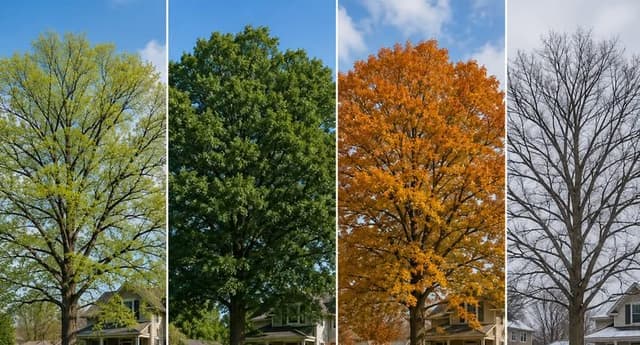
- West Michigan trees face four high-stress seasons: subzero winters, severe summer storms, drought stretches, and freeze-thaw cycles.
- Late winter (February to early March) is the safest pruning window for most species in Grand Rapids.
- Oaks must only be pruned during dormancy (typically October through April 15) to avoid oak wilt transmission.
- Fall is the best planting window in Michigan because warm soil promotes root growth before dormancy.
- Newly planted trees need 10 to 15 gallons of water per week during dry stretches for the first three years.
Trees in West Michigan live through more weather extremes than most homeowners realize. A single calendar year here can include subzero windchills, 90 degree humidity, heavy lake-effect snow, ice storms, drought stretches, and the kind of summer thunderstorms that drop large limbs without warning. Healthy trees handle it. Stressed trees do not.
Smart seasonal care is the difference between a landscape that holds up beautifully for decades and one that shows damage every spring. This guide walks through what to do each season to keep your Grand Rapids trees healthy, structurally sound, and ready for whatever the next season brings.
Spring Tree Care: Recovery and Damage Assessment (March to May)
Spring is when winter damage shows itself. Snow load, freeze-thaw cycles, and salt exposure all leave marks that do not appear until growth resumes.
Early Spring Tree Problems Grand Rapids Homeowners Miss
Walk your property in late March and early April:
- Broken or hanging branches still caught in the canopy
- Split crotches where heavy snow forced a weak fork open
- Cracked bark or vertical splits caused by sudden temperature swings
- Salt damage on trees near streets, driveways, and sidewalks
- Heaving or tipping at the base, which can indicate root failure
March Through May Tree Maintenance Checklist
- Hazard pruning: Remove broken, dead, or hanging branches before leaves emerge and add weight
- Structural pruning on young trees: Late winter through early spring (before bud break) is the best window for shaping growth in trees under 10 years old. Our tree pruning service handles this work
- Avoid oak pruning after April 15: This is when sap-feeding beetles that spread oak wilt become active in Michigan. According to Michigan State University Extension, pruning is only allowed in true emergencies during this window
- Mulch refresh: A 2 to 4 inch layer of wood chip mulch out to the drip line, kept off the trunk, regulates soil temperature and moisture as trees push new growth
- Shrub work: Spring is a good time to assess overgrown or storm-damaged shrubs. Our shrub trimming and removal service covers light reshaping through full removal
Spring Fertilization Decisions
Most established trees in West Michigan do not need fertilizer. Forest soils naturally cycle nutrients through leaf litter, and most landscape trees pull what they need. Exceptions: trees showing pale leaves, stunted growth, or recovering from major stress. Soil testing through MSU Extension is more useful than guessing.
Summer Tree Care: Active Threat Monitoring (June to August)
Summer is when problems surface fastest. Disease pressure peaks, insects emerge in force, and drought stress can compound previous winter damage.
Summer Threats Hitting Grand Rapids Trees Right Now
- Oak wilt symptoms: Sudden leaf wilt and bronze coloration on red oaks, usually mid-July through August
- Emerald ash borer signs: D-shaped exit holes, canopy dieback from the top down, bark splits with serpentine galleries underneath. According to EmeraldAshBorer.info, the pest was first identified in Southeast Michigan in 2002 and has spread statewide
- Japanese beetle damage: Skeletonized leaves on lindens, crabapples, birches, and maples
- Apple scab progression: Heavy defoliation on crabapples by July
- Drought stress: Early fall color, premature leaf drop, leaf curl, especially on newly planted trees
Summer Tree Care Priorities
- Deep watering during dry spells: Trees planted within the last three years need 10 to 15 gallons of water per week during stretches without rain. Use a slow soak, not a sprinkler. The goal is moisture two feet down, not surface wetting
- Avoid pruning oaks: Stick to dormant season pruning unless emergency removal is required
- Storm damage walks: Walk the property after any major storm and check for cracked limbs, especially in mature maples and willows. Our emergency tree service handles storm response across Kent County
- Pest scouting: Early detection of EAB, scale, and borers determines whether treatment is possible
Summer Field Notes from Big Chipper Crews
Midsummer is when calls come in about ash trees homeowners thought were fine. The canopy looks thin from the road. Up close, half the branches are dead. EAB has been working on those trees for three to four years by the time most people notice. Earlier action with systemic injection (when 30 percent or less of the canopy is affected) has a real chance. Past that point, removal becomes the safer call.
Fall Tree Care: Highest Value Work of the Year (September to November)
Fall is when most of the high-value tree care happens. Cooler temperatures reduce stress on trees, leaves on the ground reveal canopy structure, and disease pressure drops.
Fall Tree Care Priorities
- Major pruning of most species: Once leaves drop, structure is visible. Crossing branches, deadwood, weak unions, and clearance issues become easy to see and address
- Planting: Fall is the best planting window in Michigan. Soil stays warm for weeks after air temperatures cool, which encourages root establishment before winter dormancy
- Leaf cleanup, especially around diseased trees: Apple scab spores overwinter on fallen leaves. Removing those leaves breaks the disease cycle for next spring
- Deep watering before freeze: Evergreens especially benefit from a thorough soak in late October or early November. They continue to lose moisture through needles all winter and need reserves to draw from
- Mulch top-up: A fresh 2 to 3 inch layer insulates roots through freeze-thaw cycles
- Lot work: Fall is a good window for land clearing when the ground is firm but not frozen
Pre-Winter Tree Risk Assessment
This is the season to honestly evaluate the large trees over your house, driveway, power lines, and gathering spaces. A defective tree heading into winter is a defective tree waiting for a snow load, an ice storm, or a wet windy event to bring it down.
Look for:
- Dead branches over targets (cars, decks, roofs)
- Visible cavities, fungal conks, or mushroom growth on the trunk or root flare
- Vertical cracks running up the trunk
- Severe lean that has developed recently
- Heaving soil on the upwind side of a leaning tree
Any of these warrants an inspection from a certified arborist before winter weather arrives.
Winter Tree Care: Dormant Pruning and Storm Response (December to February)
Cold temperatures stop most insect and disease activity, making winter the ideal window for working on oaks, elms, and other species that cannot be pruned safely during growing season.
Winter Tree Care Priorities
- Dormant pruning: Oaks, elms, honey locusts, and most large shade trees can be pruned through winter with the lowest disease transmission risk of the year
- Storm response planning: Know who to call before you need them. Storm calls in West Michigan back up fast when ice or wind events hit. Big Chipper emergency response lines stay open through major events
- Salt management: Avoid piling shoveled snow against trunks, especially on conifers. Salt laden snowmelt damages bark and roots
- Inspection of evergreens: Heavy wet snow loads can split arborvitae and spruces. Gently brushing snow off branches (upward motion, not downward) prevents permanent damage
Winter Damage to Watch For
Frost cracks (vertical splits on the south and southwest sides of thin barked trees like maples) happen when bark warms during sunny winter days and freezes rapidly at night. Damage is not usually fatal but creates entry points for decay fungi.
Grand Rapids Tree Care Calendar at a Glance
| Season | Best Activities | Avoid |
| Late winter (Feb to early March) | Structural pruning, dormant pruning of oaks | Pruning frost-cracked trees in deep cold |
| Spring (April to May) | Mulching, new tree watering setup | Oak pruning after April 15 |
| Summer (June to August) | Watering, EAB scouting, post-storm walks | Major pruning, fertilization in heat |
| Fall (Sept to Nov) | Planting, sanitation, deep watering | Heavy pruning of spring bloomers |
| Winter (Dec to Feb) | Dormant pruning, risk assessment | Heavy snow loads on arborvitae |
Year-Round Tree Care Habits That Matter
Some practices apply every season:
- Keep mulch off the trunk. Volcano mulching kills more trees than most diseases
- Avoid string trimmer damage. Bark wounds at the base provide entry for decay and pests
- Note changes year over year. The best early warning system is a homeowner who pays attention
Frequently Asked Questions
When is the best time to prune trees in Grand Rapids?
Most species are best pruned in late winter (February through early March) before bud break. Oaks should only be pruned between October and April 15 to avoid oak wilt transmission.
Do I need to fertilize my mature trees every year?
No. Most established trees in West Michigan get sufficient nutrients from the soil. Fertilize only when soil testing or visible deficiency symptoms indicate a need.
How much should I water my newly planted tree in Michigan?
About 10 to 15 gallons per week during dry stretches for the first three years. Slow, deep watering at the root zone, not surface sprinkling.
Is fall a good time to plant trees in Michigan?
Yes. Fall planting allows roots to establish in warm soil before winter dormancy. Plant by mid-October for best results in Grand Rapids.
Should I wrap young tree trunks for winter?
Thin-barked young trees (maple, linden, fruit trees) benefit from trunk wrap in their first three to five winters to prevent frost cracking. Remove the wrap each spring.
What should I do if a tree falls during a storm?
Stay clear if it is near power lines and call your utility immediately. For non-electrical hazards, document the damage with photos for insurance and call a certified arborist for safe removal.
How often should mature trees be inspected in Grand Rapids?
At minimum, an annual fall inspection on any large tree within striking distance of a structure, walkway, or driveway.
When to Call a Certified Arborist
Calls worth making each year:
- A fall inspection on any large tree near a structure
- Midsummer if oak or ash symptoms appear
- After any storm, you can see damage in the canopy
- Before any pruning of large trees where rigging or working at height is required
Big Chipper Tree Service covers the full West Michigan area, including Grand Rapids, Grandville, Wyoming, Jenison, Jamestown, Byron Center, and Comstock Park.