Winter tree stress signs include vertical trunk cracks, sunscald, dead or cracked bark, brown or scorched evergreen needles, and dead branch tips or upper crown sections. Other warning signs include delayed budding, unusually small leaves, sparse foliage, and failure to leaf out alongside other trees of the same species. Recognizing the signs of tree stress early in the spring is crucial for saving your beloved maples, oaks, and evergreens before the damage becomes irreversible and leads to expensive tree removal.
Why Are Michigan Winters So Damaging to Trees?
Tree stress in the winter does not just come from the cold itself; it comes from the rapid shifts in the environment. When temperatures drop below freezing and then suddenly spike, the internal moisture of the tree expands and contracts. Winter winds are also incredibly dry, and when the ground is frozen solid, a tree’s root system cannot absorb water to replace the moisture stripped away by those fierce winds. This combination of physical expansion, desiccation, and heavy snow loading creates the perfect storm for landscape damage, and that stress is even harder on older, weaker trees.
What Are the Top Indicators of Winter Tree Stress?
As the snow melts and spring approaches, you should conduct a thorough inspection of your property. Look closely for these critical warning signs that indicate your trees have suffered winter stress.
Frost Cracks and Sunscald
Frost cracks, also known as radial shakes, appear as deep, vertical splits down the trunk of the tree. They occur when the outer bark cools and shrinks faster than the inner wood during a sudden drop in temperature. Sunscald is a similar issue that happens on bright, cold winter days. The sun warms the bark and breaks the tree’s dormancy on that side, and when the sun sets and temperatures plummet, the newly active cells freeze and die, leaving an area of dead, cracked bark.
Winter Burn on Evergreens
Evergreens keep their foliage all year, which means they continue to lose moisture through their needles even in January. If the ground is frozen, the roots cannot pull up water to replace what is lost to the harsh winds. This results in winter burn, which shows up as brown, rusted, or scorched-looking needles, particularly on the side of the tree facing the prevailing wind.
Dieback and Dead Branches
If you notice that the tips of branches or entire upper sections of the crown are dead while the rest of the tree is budding, the tree is experiencing dieback. This often happens when the tree lacks the stored energy to keep its entire structure alive through a prolonged freeze.
Delayed or Stunted Leaf-Out
In a healthy Michigan spring, trees of the same species should begin budding and leafing out at roughly the same time. If the oaks down the street are full of green leaves but yours are still bare or producing unusually small, sparse leaves, it is a major red flag. This indicates severe root damage or systemic stress.
Can a Tree Recover From Severe Winter Burn?
Yes, evergreens can often recover from winter burn if the buds have not been killed. Brown or reddish needles do not always mean the entire branch is dead, so wait until late spring to see whether new growth appears before pruning affected branches. Keep the tree adequately watered once the ground thaws, especially during dry spring conditions. Avoid heavy pruning while the tree is recovering, since healthy foliage helps it rebuild energy. If large sections remain brown or show no signs of new growth, a professional tree service in Grand Rapids, MI, can perform a detailed assessment to determine the extent of the damage.
Should I Seal Frost Cracks?
No. Trees naturally compartmentalize damage, and applying sealants or paint can actually trap moisture and encourage fungal rot. Frost cracks should simply be monitored as the tree begins its spring growth. Keep the area around the crack free from additional damage and avoid cutting into the affected bark without professional guidance. Some cracks gradually close as the tree produces new growth, while larger or deeper cracks can weaken the trunk. If a frost crack is extensive or appears on a large structural branch, have the tree inspected for potential safety concerns.
How Do You Check Your Trees After a Michigan Winter?
A simple spring walk-around tells you most of what you need to know. Work through your property in four areas and note anything that looks off compared to healthy trees of the same species nearby.
Start with the trunk and bark. Look for deep vertical splits (frost cracks) or patches of dead, cracked bark (sunscald). Do not seal or paint these. Monitor them as spring growth begins, and if the cracks are large or sit on a structural branch, request a professional safety inspection.
Next, check evergreen foliage. Brown, rusted, or scorched-looking needles, especially on the windward side, point to winter burn. Wait until late spring to check for new buds before pruning anything, and water the tree well once the ground thaws.
Then look at the upper canopy. If the branch tips or whole upper sections stay dead while the rest of the tree buds out, that is dieback. These sections usually need expert pruning to safely remove the deadwood, since the tree no longer has the stored energy to keep them alive.
Finally, watch the spring growth. Bare branches or unusually small, sparse leaves while neighboring trees of the same species are full is a sign of severe root damage or systemic stress, and it is worth a full health assessment from a tree care expert.
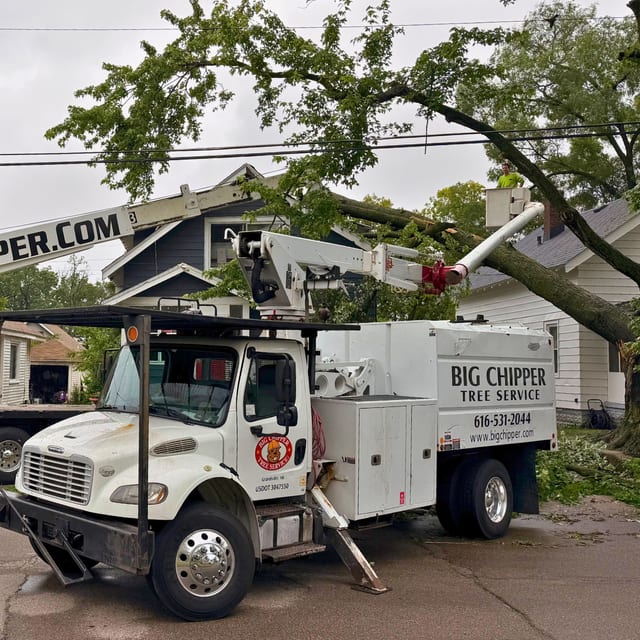
Big Chipper Tree Service helps Michigan homeowners identify and address winter tree damage through professional assessments, expert pruning, and hazardous limb removal. Our team evaluates frost cracks, winter burn, dead branches, and delayed spring growth to recommend the right care for your trees. If severe damage makes a tree unsafe or beyond recovery, we also provide safe, professional tree removal.
Frequently Asked Questions
How can I tell if a tree has suffered winter damage?
Look for cracked or peeling bark, brown evergreen needles, dead branches, and delayed or sparse leaf growth. Damage may not become obvious until spring, when trees resume active growth. Compare affected trees with healthy trees of the same species nearby to spot unusual changes.
When should I inspect my trees after winter?
Early to mid-spring is a good time to inspect trees after the worst winter weather has passed. Look for damage as snow melts and trees begin producing new buds and leaves. A second inspection in late spring helps reveal branches that did not recover.
Can winter damage kill a tree?
Severe winter damage can contribute to tree decline or death, particularly when it affects the trunk, roots, or a large portion of the canopy. However, many trees recover from moderate damage with proper care. The extent of the damage and the tree’s overall health determine its ability to bounce back.
Should I prune winter-damaged branches immediately?
Not always. Some branches that appear dead in early spring may still produce new growth as temperatures rise. Waiting until late spring makes it easier to identify which branches have actually died. Once deadwood is confirmed, proper pruning helps reduce safety risks and improve the tree’s structure.
Can frozen soil cause tree stress after winter?
Yes. Frozen soil limits the roots’ ability to absorb water while winter winds keep drawing moisture from branches and foliage. This is especially hard on evergreens, which keep losing moisture through their needles all winter. Providing adequate water after the ground thaws helps trees recover from seasonal moisture stress.
When should I call a tree care professional after winter damage?
Consider a professional assessment if you notice large frost cracks, extensive dieback, hanging or broken branches, major canopy loss, or signs that the tree is leaning. A professional evaluation helps determine whether damaged limbs can be pruned safely or whether more extensive care is needed.
Does Big Chipper Tree Service provide tree services in Grandville, MI?
Yes. Big Chipper Tree Service serves Grand Rapids and nearby West Michigan communities with tree removal, pruning and trimming, hazardous limb removal, and other tree care. Learn more about our tree services in Grandville, MI.
Call Big Chipper Tree Service at (616) 300-1811 to discuss your winter-damaged trees and request a free estimate.