A tree that looked fine in November can be a very different tree by April, and the damage that made the difference usually happened somewhere nobody was looking: inside the trunk, on a sunny January afternoon.
This article explains what winter actually does to older trees in West Michigan, why the risk compounds year after year instead of resetting each spring, and what to look for once the snow clears.
Key Takeaways
- Michigan’s freeze-thaw cycles gradually weaken aging trees by creating frost cracks and internal wood damage.
- Frost cracks often reopen in the same location each winter, making the trunk weaker over time.
- Older trees face greater risk because decades of weather, pruning wounds, and storm damage compound structural stress.
- Thin-barked species like maple, birch, ash, and sycamore are especially vulnerable to winter injury.
- Early spring is the best time to inspect for new cracks, leaning trunks, broken limbs, exposed roots, and other signs of winter damage.
- Trees with reopened frost cracks, new lean, or root movement should receive a professional structural assessment before the next storm season.
- Preventive inspections and timely pruning can reduce the risk of unexpected tree failure and costly property damage.
What’s Actually Happening Inside the Trunk During a Michigan Winter?
Winter weakens aging trees mainly through freeze-thaw stress: repeated cycles of the outer wood warming, expanding, then rapidly refreezing and contracting, which gradually splits wood fibers that a single cold snap wouldn’t touch. Michigan State University Extension has documented this pattern for decades in trees across the state.
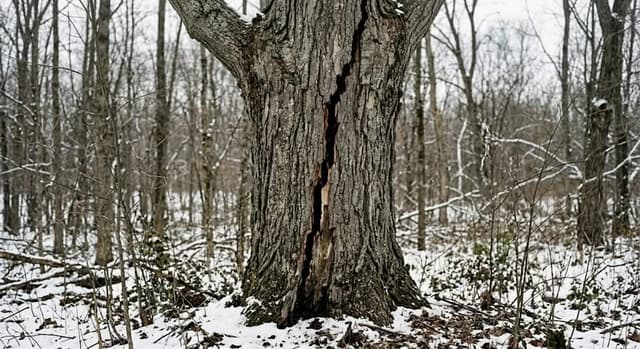
On a sunny winter day, sunlight warms the south or southwest side of a trunk enough for the outer layers to expand slightly. When the sun drops and temperatures fall fast, that warmed layer contracts again just as quickly, but the wood underneath cools more slowly. The mismatch in speed is what splits the bark, producing a vertical frost crack.
Why the Same Crack Reopens Every Year
Most homeowners assume a healed-looking scar means the problem is over. It usually isn’t.
MSU Extension has tracked frost cracks on individual trees, including a well-documented sycamore on MSU’s own campus, that reopen at the exact same spot nearly every winter once the initial split occurs. The tree partially seals the wound during the growing season, but the weak point in the wood grain never fully disappears, so the next hard freeze-thaw cycle reopens it again, often a little wider than before.
The Metal Fatigue Comparison
Picture bending a paperclip back and forth at the same point. The first bend doesn’t break it. Neither does the second. But each flex weakens the metal fibers a little more at that exact spot, until eventually it snaps with barely any force at all.
A trunk with a recurring frost crack works the same way. Each winter adds another cycle of stress to a spot that’s already compromised, which is why a tree can survive a frost crack for twenty years and then fail during an otherwise unremarkable wind event.
Why Older Trees Take the Hardest Hit
Age changes a tree’s vulnerability to winter stress in two directions at once, and it’s worth understanding both.
Older trees have accumulated more small wounds, more old pruning cuts, and more years of freeze-thaw cycling than young trees, so there’s simply more compromised wood to work with. At the same time, species with thin bark, including maple, birch, and ash, stay vulnerable to frost cracking their entire lives, while thick-barked species like oak fare noticeably better. A 60-year-old silver maple with thin bark and a long history of Michigan winters carries a very different risk profile than a young oak planted five years ago.
What We Commonly See in the Field Every Spring
By March and April, we’re regularly called out to trees the homeowner describes as “fine all winter” that turn out to have fresh vertical cracking, new lean, or limbs that snapped clean under a late-season snow load. The damage was there the whole time. It just wasn’t visible until the tree tried to leaf out and put weight back on a compromised structure.
How the Risk Compounds Over Decades, Not Seasons
It helps to think of winter stress as additive rather than reset-and-repeat. A young tree that experiences its first hard freeze-thaw winter typically shrugs it off with no visible damage at all. The same tree at 40 or 60 years old has been through dozens of these cycles, plus old pruning wounds, storm damage, and construction stress from decades of yard changes around it.
None of those individual events would bring the tree down on its own. Stacked together over a long lifespan, they create a tree with multiple weak points instead of one, which is exactly why age and winter exposure are such a strong combination for risk, and why a tree that seemed perfectly stable for thirty years can suddenly show problems in its fourth or fifth decade. MSU Extension’s winter injury research tracks these cumulative stress patterns across Michigan landscapes every year.
Winter Stress Types and What They Do to a Tree
| Winter Stress | What’s Happening | Most at Risk |
| Frost cracking | Rapid contraction splits bark and outer wood on sunny, cold days | Thin-barked trees: maple, birch, ash |
| Frost heaving | Freeze-thaw cycles lift and loosen soil around roots | Shallow-rooted trees in clay soil |
| Heavy snow/ice load | Weight overloads weak branch unions and old wounds | Aging trees with existing structural issues |
| Sunscald | South-facing bark warms by day and refreezes at night | Young or recently exposed trees |
Spring Tree Inspection Checklist
- Walk the full base of the trunk and look for new vertical cracks, especially on the south or southwest side
- Check for frost heaving: soil pulled away from the trunk base or exposed roots
- Look up through the canopy for broken or hanging limbs from snow and ice load
- Note any new lean, even a slight one, compared to last fall
- Check old wound sites and pruning cuts for reopened cracks or new decay
Should You Monitor, Prune, or Get an Assessment?
If a tree fails outright rather than just showing warning signs, that’s a call for emergency tree service rather than a scheduled visit. For everything short of an active failure, use this table as a starting point:
| What You Find | Recommended Action |
| Minor bark cracking, no gap, tree otherwise healthy | Monitor through the growing season |
| Broken limbs from snow load, no trunk damage | Schedule preventive pruning |
| Reopened frost crack, visible gap, or new lean | Get a professional structural assessment |
| Frost heaving with exposed roots on a large tree | Get a professional structural assessment |
Frequently Asked Questions
Can a tree recover from a frost crack?
Trees don’t heal a frost crack the way skin heals a cut. They wall off the injury with callus tissue over the growing season, but the original weak point in the wood grain remains and often reopens during future freeze-thaw cycles. Most trees tolerate an occasional frost crack fine; repeated ones on the same tree are worth a professional look.
Which trees are most at risk from Michigan winters?
Thin-barked species like maple, birch, ash, and sycamore are the most prone to frost cracking. Trees that are already older, previously wounded, or growing in shallow clay soil face compounding risk from frost heaving on top of trunk damage.
When is the best time to inspect trees for winter damage?
Early spring, as soon as the snow clears and before trees fully leaf out, is the ideal window. Bare branches make cracks, breaks, and lean easier to spot, and catching damage before a tree puts on a full canopy of weight reduces the risk of a spring or summer failure.
Does mulching really help prevent winter damage?
A 2 to 4-inch layer of mulch around the base, kept away from direct contact with the trunk, helps moderate soil temperature swings and reduces frost heaving, a practice MSU Extension recommends for home landscapes across the state. It doesn’t prevent frost cracking on the trunk itself, but it protects the root zone, which matters more for a tree’s long-term stability.
Is a tree with an old frost crack scar automatically dangerous?
Not automatically. Many trees carry old frost crack scars for decades without failing. The concern is a crack that’s actively reopening, widening, or accompanied by other signs of decay, since that combination signals the wound is still an active weak point rather than a stable, healed scar.
How do I know if winter damage is severe enough to need removal?
Removal typically becomes the recommendation when trunk damage is extensive, when the crack runs deep into structural wood, or when it’s combined with a significant lean or root damage. A certified arborist assessment can determine whether the tree is a pruning case or a removal case.
Protect Aging Trees Before Hidden Winter Damage Turns Dangerous
Michigan winters don’t announce the damage they cause. A frost crack from January or a loosened root system from a February thaw can sit quietly until a spring storm or a summer wind gust finally tests the weak point.
The trees most likely to fail aren’t the ones that look obviously bad. They’re the older, thin-barked trees that have absorbed one freeze-thaw cycle too many without anyone taking a close look. If it’s been more than a season since your mature trees had a real inspection, the team at Big Chipper Tree Service can walk the property and flag anything winter left behind before it becomes a bigger problem.