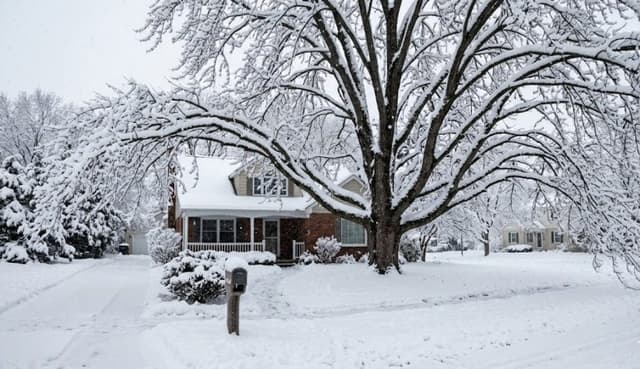
Lake-effect snow is one of the biggest hidden threats to mature maples in Grand Rapids. Wet, heavy snow off Lake Michigan can dump 6 to 15 inches in a single event, and that weight quickly overwhelms branch unions, weak limbs, and the brittle wood common in fast-growing maple species.
A 50-year-old silver maple in your front yard can lose a major limb in one storm. The damage often costs more in roof and gutter repairs than the tree was worth.
This guide explains why maples are especially vulnerable in West Michigan, what to look for before winter, and the steps that actually prevent storm damage.
Key Takeaways
- Grand Rapids gets 70 to 80 inches of snow per year on average, much of it from lake-effect events off Lake Michigan.
- Wet snow weighs roughly 20 pounds per cubic foot, loading mature maples with thousands of pounds of stress.
- Silver maples and Norway maples are the most failure-prone in our climate.
- Pre-winter structural pruning is the single most effective protection.
- Knowing when to call an arborist after a storm prevents delayed limb failures from causing more damage.
Why Lake-Effect Snow Is Different From Regular Snow
Most winter snow falls light and fluffy. Lake-effect snow is different. As cold air passes over the relatively warm waters of Lake Michigan, it picks up moisture and dumps it as wet, dense snow on the downwind shore.
Per the Great Lakes Integrated Sciences and Assessments at the University of Michigan, Grand Rapids sits squarely in the lake-effect snowbelt. Single events here can drop 6 to 15 inches in 24 hours, and entire snowbands can sit over the same neighborhoods for hours.
The combination of high water content and rapid accumulation is what makes lake-effect snow so dangerous to trees. A single foot of wet snow can add hundreds of pounds to a single mature limb.
Why Mature Maples Are Especially at Risk
Maples are the most common shade tree in Grand Rapids. They’re also among the most failure-prone under heavy snow loads. Three reasons:
1. Brittle Wood in Fast-Growing Species
Silver maples and Norway maples grow fast, which means weak, low-density wood. Sugar and red maples are tougher but still vulnerable when mature.
2. Common Structural Defects
Mature maples often have codominant trunks, including bark, and tight V-shaped unions. These are the exact failure points of snow load exploits.
3. Wide, Heavy Canopies
A mature maple canopy can spread 40 to 60 feet across. That horizontal reach gives snow enormous leverage on the trunk and main limbs.
How Much Weight Snow Actually Adds
The math is more dramatic than most homeowners realize:
| Snow Type | Weight per Cubic Foot | 12 Inches on a 30-foot Limb |
|---|---|---|
| Dry, fluffy snow | ~7 lbs | ~210 lbs |
| Average snow | ~15 lbs | ~450 lbs |
| Wet lake-effect snow | ~20 lbs | ~600 lbs |
| Snow + freezing rain glaze | ~30 lbs | ~900 lbs |
A mature silver maple with multiple major limbs can carry several thousand pounds of snow during a heavy lake-effect event. That weight finds the weakest joint in the tree first.
The Warning Signs to Look for Before Winter
Walk your maples in October or early November. Pay attention to:
Codominant Trunks
Two trunks of equal size meet in a tight V at the base. This is the single most common failure point in Grand Rapids maples.
Included Bark
Bark trapped between two limbs, visible as a vertical seam. Means the wood is not properly fused. These unions split first under load.
Cracks at Branch Unions
Visible cracks where major limbs meet the trunk. Even small cracks expand under snow load.
Long Horizontal Limbs
Limbs that extend far from the trunk with most of the foliage at the tip. Massive leverage. Common breakage point.
Deadwood
Dead branches snap first. They take live limbs down with them when they fall.
Past Storm Damage
Old wounds, partially healed splits, or hanging stubs. These are stress points waiting for the next big snow.
Pre-Winter Protection Steps
1. Schedule Structural Pruning in Fall
This is the single most effective step. A certified arborist removes deadwood, reduces end-weight on long limbs, and addresses weak unions before winter.
The best window is October through early December, after leaf drop but before heavy snow.
2. Cable and Brace High-Risk Unions
For mature maples with codominant trunks worth saving, a properly installed steel cable can hold the union together through severe snow loading. This is professional work, not DIY.
3. Remove Trees in Terminal Decline
A maple in serious decline is not worth protecting through another winter. Removal in the fall is cheaper and safer than emergency removal after a January storm.
4. Clear Targets Underneath
Move outdoor furniture, grills, planters, and vehicles out from under mature maples before the first big storm. If a limb does fall, the impact zone matters.
5. Prepare for the Worst Trees
If a maple has obvious defects but you’re not ready to remove it, document its condition with photos, notify your insurance carrier, and stay out from under it during snow events.
What to Do During and After a Heavy Lake-Effect Storm
During the Storm
- Stay inside. Falling limbs are unpredictable.
- Do not knock snow off branches with a rake or pole. The shock causes more breakage than the snow itself.
- Listen for cracking sounds. Continuous cracking near the house means evacuate that area.
- Monitor the National Weather Service Grand Rapids office for snowfall totals and warnings.
Right After
- Look up before going outside. Snow-loaded branches can fall hours after the storm ends.
- Stay 25 feet away from any downed power line and assume it’s live.
- Photograph any tree damage from a safe distance for insurance claims.
- Schedule an arborist inspection within 24 to 48 hours for any damaged tree near a structure.
Common Hidden Damage
After a heavy snow event, even maples that look fine often have:
- Cracked branch unions hidden by remaining snow
- Partially separated bark
- Internal limb fractures
- Loosened root systems from the leverage of the heavy canopy load
These defects often fail days or weeks later during normal weather. A post-storm professional inspection catches them early.
Maple Species Risk Profile in Grand Rapids
| Maple Species | Snow Load Risk | Why |
|---|---|---|
| Silver maple | Very High | Rapid growth, brittle wood, and weak branch attachments increase failure risk |
| Norway maple | High | Dense canopy and tight branch unions can trap snow and create structural stress |
| Boxelder | High | Soft wood and a naturally weaker structure make breakage more common |
| Red maple | Moderate | Generally stronger wood, though weak branch unions can still develop |
| Sugar maple | Moderate | Strong wood structure, but aging trees may develop decay or structural defects |
| Freeman maple (hybrids) | Moderate | Improved structure compared with silver maple, but end-weight management still matters |
If your front yard has a 60-year-old silver maple over the driveway, it’s the first tree in the neighborhood that needs attention.
When Insurance Covers Snow Damage (and When It Doesn’t)
Most Grand Rapids homeowner policies cover:
- Tree falls on a covered structure (house, garage, fence): removal and repair typically covered
- Damage to vehicles from a fallen tree: covered under comprehensive auto, not homeowners
- A neighbor’s tree falls on your property: usually, your own policy handles it
Most policies do NOT cover:
- Removal of a damaged but standing tree
- Preventive removal of a tree showing decline
- Yard cleanup with no structural damage
Document tree condition with photos before winter, and again after any major event. This baseline matters if you ever file a claim.
Common Mistakes Grand Rapids Homeowners Make
- Knocking snow off branches with a pole Snaps brittle limbs immediately.
- Ignoring small cracks until they become full splits.
- Pruning maples during the wrong season. Late winter to early spring is best for most species.
- Topping a damaged maple. Creates weak regrowth that fails worse next time.
- Skipping post-storm inspections because the tree “looks fine.”
Expert insight: The maples we’re called to remove in February are almost always the same trees we offered to prune the previous October. Pre-winter inspections are the cheapest insurance a Grand Rapids homeowner can buy.
Frequently Asked Questions
How much snow does Grand Rapids actually get from lake-effect events?
Grand Rapids averages 70 to 80 inches of snow per year, with a significant portion coming from lake-effect events. Single storms can drop over a foot, with localized snowbands producing even more.
Why are silver maples so vulnerable to snow damage?
Silver maples grow fast, which creates low-density, brittle wood. They also commonly develop codominant trunks and tight branch unions that split easily under heavy snow load.
Should I knock snow off my mature maple’s branches?
No. The shock from hitting snow-loaded branches almost always breaks more than it saves. Let the snow melt naturally.
When is the best time to prune mature maples in Grand Rapids?
Late winter to early spring (February to mid-April). This timing avoids excessive sap bleeding common when maples are pruned in early winter or late spring.
How do I know if my maple has a codominant trunk problem?
Look at the base where the main trunk splits. If two trunks of similar size meet in a tight V (less than 45 degrees apart), that’s a codominant union. Wider U-shaped unions are stronger.
Can a damaged maple be saved after a snowstorm?
Often yes, with prompt restoration pruning. Trees with less than 25% canopy loss, an intact trunk, and a healthy root system typically recover. A certified arborist makes the call.
How often should I have my maples professionally inspected?
Mature maples in Grand Rapids benefit from inspection every 2 to 3 years, plus after any major storm event. Trees over 50 years old or showing visible defects need yearly attention.
What does cabling do for a weak maple union?
A properly installed steel cable runs between two large limbs above the weak union, sharing the load and reducing the chance of catastrophic split failure. It’s a long-term solution that adds decades of life to a structurally compromised tree.
Is it worth removing a mature maple before it fails?
If the tree has serious structural defects and is positioned over a structure, driveway, or play area, yes. Preventive removal in the fall costs significantly less than emergency removal after a storm, and your insurance won’t cover the standing tree.
Will my insurance cover damage from a snow-loaded tree?
Generally, only if the tree damages a covered structure. Removal of a standing damaged tree, yard cleanup, and preventive work are usually the homeowner’s responsibility.
How quickly should I respond after a maple is damaged?
Within 24 to 48 hours for inspection, especially if the tree is near your house, driveway, or power lines. Hidden damage from snow load often causes delayed failures days or weeks later.
Are some Grand Rapids neighborhoods more at risk?
Yes. Older neighborhoods like Heritage Hill, East Grand Rapids, and Eastown have many mature silver and Norway maples planted as street trees in the early-to-mid 20th century. These are now reaching the age where structural failures become common.
Protect Your Mature Maples Before the Next Snowstorm
Lake-effect snow loads are one of the most predictable threats to mature maples in Grand Rapids. The good news: they are also one of the most preventable. A fall structural pruning visit, attention to known defects, and quick post-storm inspections handle the vast majority of risk.
Worried about how a mature maple on your property will hold up this winter? Call Big Chipper Tree Service LLC to schedule a pre-winter inspection and structural pruning visit before the first big lake-effect event hits. Our certified team will identify the defects that matter, recommend what to do about each one, and protect both your trees and your home.