Structural pruning increases home value in East Grand Rapids by shaping trees into strong, attractive forms that frame your house, reduce future risk, and signal active maintenance to buyers. Studies consistently show that well-maintained mature trees add anywhere from 3 to 15 percent to a home’s sale price, with some markets reporting even higher gains. In a neighborhood like East Grand Rapids, where mature canopies are part of the identity, that translates to real dollars.
Structural pruning is not the same as trimming. Trimming is cosmetic. Structural pruning is the deliberate, science-based shaping of branch architecture to build a tree that lives longer, looks better, and never becomes a liability. This guide breaks down how it works, why it matters specifically in East Grand Rapids, and how to know when your trees are due.
Key Takeaways
- Structural pruning shapes a tree’s branch architecture to prevent future failures and improve appearance.
- Well-maintained mature trees can add 3 to 15 percent to a home’s value, with stronger gains in tree-loved markets like East Grand Rapids.
- Young trees benefit most; pruning every 2 to 3 years builds lifelong structure.
- Mature trees benefit from periodic structural pruning to address weak unions, deadwood, and over-extended limbs.
- Avoid topping. It destroys structure, creates hazards, and reduces home value.
Signs You Need Structural Pruning Now
Before you read further, walk outside and look at your trees. If you see any of these, schedule an inspection:
- Two trunks of equal size meeting in a tight V
- Dead branches in the canopy
- Limbs leaning over the roof, driveway, or power lines
- Visible cracks where two large limbs meet
- A canopy that looks lopsided or top-heavy
- Watersprouts (vertical shoots) growing straight up from major limbs
Catching these early saves trees, prevents emergencies, and protects your home value.
Structural Pruning vs. Tree Trimming: The Quick Difference
| Structural Pruning | Tree Trimming |
|---|---|
| Focuses on the tree’s long-term structure and stability | Primarily improves appearance and routine maintenance |
| Targets structural defects like weak unions, co-dominant stems, and poor branch architecture | Removes overgrowth, stray branches, or foliage for shape and clearance |
| Typically follows recognized arboricultural best practices such as ANSI A300 standards | May vary widely depending on provider and project goals |
| Performed on a strategic maintenance schedule, often every few years | Performed as needed for maintenance, clearance, or appearance |
| Helps reduce future failure risk and supports long-term property value | Maintains current aesthetics and immediate functional clearance |
Trimming makes a tree look tidy this season. Structural pruning makes it stronger for the next 50 years.
What Structural Pruning Actually Means
Structural pruning is the targeted removal of specific branches to improve a tree’s long-term form, balance, and strength. A trained arborist looks for weak branch unions, codominant stems competing for the lead, crossing branches that will rub and create wounds, and limbs growing toward your house or driveway.
Unlike a quick trim, structural pruning follows the American National Standards Institute (ANSI) A300 standards developed by the International Society of Arboriculture. Every cut has a purpose. Nothing is removed without a reason.
Done correctly, structural pruning does not look dramatic from the curb. The tree should look the same shape, just cleaner, more balanced, and better lit. That is the sign it was done right.
Why Curb Appeal Matters So Much in East Grand Rapids
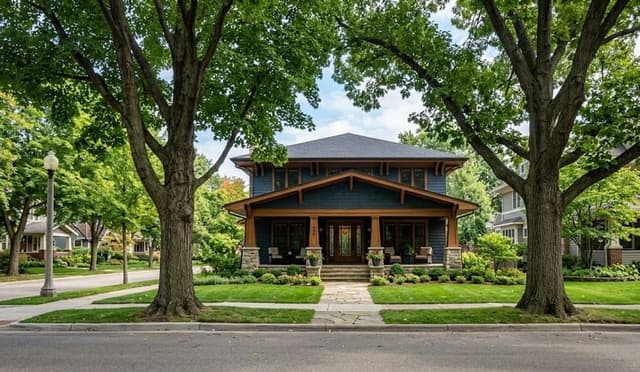
East Grand Rapids sits in a market where buyers expect mature, well-maintained landscapes. Streets like Robinson Road, Wealthy Street, and the Gaslight Village area are defined by their tree canopies. A property with poorly shaped, overgrown, or leaning trees stands out for the wrong reason.
Real estate agents in West Michigan consistently note that the first 10 seconds of a buyer’s drive-by determine whether they want to see inside. Trees frame the house. They create the silhouette that buyers form an opinion about before they ever open the front door.
A 2021 University of Nebraska–Lincoln study sponsored by the Arbor Day Foundation and USDA Forest Service found that trees add over $31.5 billion in collective value to U.S. private home properties every year. That value is not automatic; it requires healthy, well-shaped trees, not neglected ones.
How Structural Pruning Builds Home Value
1. Stronger Trees Mean Lower Buyer Risk
When buyers see a mature tree leaning over a roof or with a deep V-shaped union waiting to split, they price in the cost of removal. A structurally sound tree, on the other hand, is an asset on the inspection report.
2. Better Sight Lines to the House
A well-pruned tree frames the house instead of hiding it. Selective thinning lets sunlight reach the front porch, brightens windows, and lets the architecture do its job. Buyers respond to this immediately.
3. Healthy Canopy Signals Active Care
A tidy, balanced canopy tells buyers the previous owner took maintenance seriously. That perception extends to the rest of the property, including the roof, gutters, and HVAC systems.
4. Reduced Storm Damage Risk
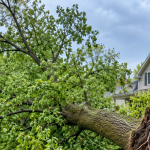
West Michigan gets ice storms, lake-effect snow, and summer microbursts. Trees with strong branch unions and balanced crowns survive these events. Trees with structural defects fail and damage the house. Insurance companies and home inspectors both notice.
5. Longer Lifespan for Mature Trees
Structural pruning extends the useful life of mature trees by decades. A 100-year-old oak in your front yard is irreplaceable; protecting it directly protects your property value.
When to Schedule Structural Pruning
Young Trees (1 to 10 Years Old)
This is the highest-value pruning you will ever pay for. Every $200 spent on structural pruning a young tree can save thousands later in removal, repair, or insurance claims. Young trees should be pruned every 2 to 3 years to develop a single dominant leader and well-spaced lateral branches.
Established Trees (10 to 30 Years Old)
Mid-life pruning corrects emerging structural defects and removes deadwood. Schedule every 3 to 5 years.
Mature Trees (30+ Years Old)
Mature trees should be inspected every 2 to 3 years. Pruning at this stage focuses on safety, weight reduction over the canopy ends, and removing dead or declining limbs.
Best Time of Year in East Grand Rapids
Late winter through early spring (February to mid-April) is ideal for most species. Wounds heal quickly as the tree wakes up. Important exception: do not prune oaks between April 15 and July 15 due to Michigan’s oak wilt risk. Spring-flowering trees like crabapples are best pruned right after they bloom.
Common Structural Defects an Arborist Will Address
A trained eye catches problems most homeowners miss:
- Codominant leaders: Two trunks of equal size are competing for dominance, creating a weak union prone to splitting.
- Included bark: Bark trapped between two limbs that prevents proper wood formation, creating an internal seam that fails under stress.
- Crossing or rubbing branches: Wear through bark, creating wounds that invite decay.
- Watersprouts and suckers: Weak vertical shoots that sap energy and create ugly silhouettes.
- End-weight imbalance: Long horizontal limbs with all the foliage at the tip, ready to break.
- Deadwood: Dead branches that fall in storms or under their own weight.
What Topping Does (and Why You Should Never Do It)
Topping is the practice of cutting major limbs back to stubs or arbitrarily reducing tree height. It is the most damaging thing you can do to a tree, and it actively reduces home value.
According to the International Society of Arboriculture, topping creates rapid weak regrowth, exposes the tree to decay, increases long-term hazard, and shortens the tree’s life. Buyers and home inspectors recognize topped trees instantly. They are a red flag, not an asset.
If a tree is genuinely too big for its location, the answer is removal and replacement, not topping.
How Structural Pruning Compares to Other Tree Services
| Service | What It Does | Curb Appeal Impact | Value Impact |
|---|---|---|---|
| Structural Pruning | Improves long-term branch structure and tree stability | High (subtle but meaningful) | High (long-term asset protection) |
| Crown Cleaning | Removes dead, damaged, or diseased branches | Moderate | Moderate (safety and health benefits) |
| Crown Thinning | Reduces canopy density to improve airflow and light penetration | Moderate | Moderate |
| Crown Reduction | Carefully decreases canopy size while preserving structure | Variable | Moderate |
| Topping | Severe cutting that removes major limbs indiscriminately | Severely negative | Strongly negative |
| Tree Removal | Removes the tree entirely from the property | Variable | Context-dependent |
How a Pro Approaches a Structural Pruning Job in East Grand Rapids
A reputable arborist in East Grand Rapids follows a clear process:
- Walk the property: Identify each tree, note species, age, condition, and location relative to the house, driveway, and utility lines.
- Diagnose structural defects: Codominant stems, including bark, weak unions, and deadwood.
- Set objectives: Improve structure, reduce risk, frame the house, and increase sight lines.
- Plan the cuts: Following ANSI A300 standards, every cut targets a specific outcome.
- Execute carefully: No more than 25 percent of a mature tree’s foliage in a single growing season.
- Clean up completely: Brush chipped, lawn raked, no debris left behind.
A homeowner should expect a written estimate, proof of insurance, and ISA certification credentials before any work begins.
Pricing and ROI in the East Grand Rapids Market
Structural pruning costs in East Grand Rapids vary by tree size, species, and access:
- Small ornamental tree (under 25 feet): typically $200 to $500 per tree
- Medium shade tree (25 to 50 feet): typically $400 to $900 per tree
- Large mature tree (50+ feet): typically $700 to $1,800 per tree
For most East Grand Rapids homes, a full structural pruning visit covering the front yard runs $1,500 to $3,500. On a home valued at $600,000 to $900,000 (typical for the area), a 3 to 5 percent value lift from a healthy, well-maintained tree canopy easily covers that investment many times over.
Avoiding Common Mistakes
- Hiring the cheapest bid. Quality pruning takes training, equipment, and insurance. Cheap usually means topped or hacked.
- Skipping young tree pruning. The most cost-effective pruning of your tree’s life happens in its first decade.
- Pruning oaks in the wrong season. April 15 to July 15 in Michigan is high-risk for oak wilt.
- DIY work on mature trees. Climbing and chainsaw work above shoulder height should not be done by homeowners.
- Overdoing it. Removing too much foliage at once stresses the tree and reduces its appearance.
Frequently Asked Questions
How is structural pruning different from regular trimming?
Trimming usually means light cosmetic work. Structural pruning is a planned, technical process that targets specific branches to build long-term form, strength, and safety. The first focuses on appearance today; the second invests in the tree’s next 50 years.
How often should I have my trees structurally pruned?
Young trees benefit from pruning every 2 to 3 years. Establish trees every 3 to 5 years. Mature trees every 2 to 3 years for inspection, with selective work as needed.
Will structural pruning hurt my tree?
No, when done correctly. Proper pruning removes no more than 25 percent of a mature tree’s foliage in a single season and follows ANSI standards. Improper pruning, especially topping, causes serious harm.
When is the best time to prune trees in East Grand Rapids?
Late winter to early spring (February to mid-April) for most species. Avoid pruning oaks between April 15 and July 15. Prune spring-flowering trees right after they bloom.
Does structural pruning really increase home value?
Yes. Multiple studies, including USDA Forest Service research, link healthy mature trees to home value increases between 3 and 15 percent. The keyword is “healthy,” and that requires structural maintenance.
How do I know if my tree has a structural problem?
Look for two trunks of equal size competing at a tight V, dead branches in the canopy, limbs leaning over the roof, cracks at branch unions, or visibly leaning trunks. A certified arborist can confirm anything you suspect.
What happens if I never structurally prune my trees?
Untrained trees develop weak branch architecture, accumulate deadwood, become more storm-vulnerable, and often need expensive corrective work or premature removal. They also drag down curb appeal as they age.
Is topping ever acceptable?
No. Topping is condemned by every credible arboricultural organization. It damages trees, increases hazards, and reduces property value. If a tree is too big for its location, the right answer is replacement.
How long does structural pruning take?
A small ornamental might take 30 to 60 minutes. A large mature shade tree can take 2 to 4 hours or more, depending on access and complexity.
Can I prune small branches myself?
Yes, dead branches under two inches and below shoulder height are reasonable for a homeowner with hand pruners. Anything larger, anything overhead, or anything requiring a ladder should go to a professional.
Will my trees look noticeably different after pruning?
If done right, the tree should look the same shape, just balanced, lighter, and cleaner. Customers sometimes ask if the crew even did the work. That is the goal.
Does insurance cover structural pruning?
No. Insurance covers sudden damage, not maintenance. The cost of preventive pruning is the homeowner’s responsibility, but it almost always saves more than it costs by preventing storm damage and extending tree life.
Protect Your Trees. Protect Your Property Value
In East Grand Rapids, structural pruning is one of the highest-return investments a homeowner can make in their property. It protects mature trees, frames your home for buyers, prevents costly storm damage, and signals the kind of active care that drives appraisals upward. Skip topping, skip the cheapest bid, and hire a certified arborist who works to ANSI standards.
Want to see how structural pruning could improve your property? Call Big Chipper Tree Service LLC at the number on our site or schedule a free on-site consultation today to get a customized pruning plan for every tree on your East Grand Rapids property.