Key Takeaways:
- Structure vs. Yard: Insurance typically covers tree removal only if the tree hits a covered structure like your home or garage.
- Documentation is King: Immediate photos, videos, and time-stamped logs are essential for a successful claim.
- Maintenance Matters: Insurance may deny claims if the tree was dead or diseased before the storm due to negligent maintenance.
- Comprehensive Coverage: Most standard Grand Rapids policies include debris removal once a structural hit is confirmed.
Grand Rapids and the surrounding West Michigan communities are no strangers to volatile weather. From the heavy lake effect snow that bows branches in January to the high-velocity wind gusts of spring thunderstorms, our local trees face constant environmental stress. When a tree finally gives way and lands on your property, the immediate shock is often followed by a wave of financial anxiety.
- Who pays for the removal?
- Will the insurance company cover the repairs to the roof?
- What if the tree belonged to a neighbor?
Navigating the intersection of arboriculture and insurance law can be a labyrinth for the unprepared. Understanding your rights and responsibilities as a homeowner is the first step toward a successful recovery. This guide breaks down the essential protocols for handling insurance claims regarding fallen trees in the Grand Rapids area, ensuring you are prepared before the next storm siren sounds. In a region where a single storm can bring down hundreds of mature Oaks and Maples, knowing the difference between a covered loss and an out-of-pocket maintenance expense is vital for your financial health.
The Foundation of Coverage: Did it Hit a Structure?
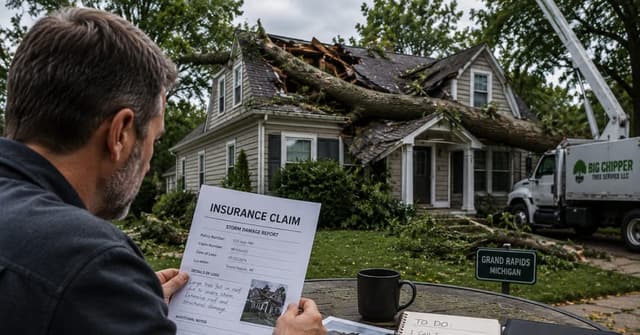
The most common misconception among homeowners is that insurance covers any tree that falls in their yard. In reality, the trigger for most homeowners’ insurance policies is the damage to a covered structure. Insurance is designed to protect your assets, specifically the dwellings and outbuildings on your property.
If a tree falls in the middle of your lawn during a windstorm but doesn’t hit anything, most insurance companies view this as a maintenance issue rather than a loss. You will likely be responsible for the cost of removal out of pocket. However, if that same tree lands on your house, garage, shed, or even a professionally installed fence, the policy typically kicks in. This coverage usually includes two parts: the cost to repair the structure and a specific allowance for debris removal, the professional service of cutting and hauling the tree away.
Defining a Covered Structure
In the Grand Rapids metro area, a covered structure usually includes your primary residence, detached garages, carports, and often fences or gazebos. Some high-end policies may include landscaping coverage, which might pay a small amount to replace the actual tree that was lost, but this is less common in standard policies. It is important to distinguish that the removal cost covered by insurance is usually limited to the portion of the tree that is actually touching the house or blocking access.
Debris Removal Sub-Limits
Most policies have a specific dollar limit for debris removal per storm event. For example, your policy might state it covers up to $1,000 for tree debris removal. If a massive oak falls and costs $3,500 to remove, you may be responsible for the remaining balance unless the tree hit the house, in which case the removal of the portion on the structure might fall under dwelling coverage, which has much higher limits.
The Act of God vs. Maintenance Negligence
In the insurance world, a storm is considered an Act of God, an unpredictable event that could not have been prevented. If a healthy tree is uprooted by a 60-mph gust, you are generally covered because the event was outside of your control. However, insurance adjusters look closely at the pre-loss condition of the tree.
The Risk of Negligent Maintenance
Insurance companies expect homeowners to mitigate known risks. If you have a large, visibly rotting Silver Maple with hollow cavities and fungal growth at the base, and you ignore it for years, the insurance company may argue negligence. If that dead tree falls during a minor breeze, the adjuster may deny the claim, citing that the loss was preventable through proper tree care. This is why annual inspections by a certified arborist are not just good for the tree’s health; they are a vital paper trail for your insurance protection.
Establishing a Maintenance History
Keeping receipts from previous pruning, trimming, or health assessments by a local Grand Rapids tree service provides proof that you were a responsible steward of your property. If a tree you recently had pruned still fails during a storm, the insurance company cannot claim negligence, as you took professional steps to ensure its stability.
Step-by-Step Post-Storm Protocol
The hours immediately following a tree failure are critical. How you handle this window can determine the speed and success of your claim.
- Prioritize Immediate Safety: Before grabbing your camera, ensure the area is safe. In Grand Rapids, fallen trees often bring down power lines. Treat every downed wire as live and contact Consumers Energy immediately at 9-1-1 or (800) 477-5050. Do not attempt to move branches that are in contact with utility lines or resting on unstable structures.
- Comprehensive Visual Documentation: Once the site is stable, document everything. Take wide shots showing the tree’s relation to the house, and close-ups of the specific points of impact. If the tree was healthy, take photos of the fresh, white wood at the break point to prove it wasn’t a pre-existing dead hazard.
- Secure the Property: Homeowners have a duty to mitigate further damage. If the tree has punched a hole in your roof, you are expected to have it tarped or covered once the tree is removed to prevent rain from destroying the interior. Keep receipts for all temporary repair materials, as these are typically reimbursable.
- Avoid DIY Removal: Attempting to use a chainsaw on a tree that is leaning on a house is incredibly dangerous. These trees are under massive tension and can kick back or cause the structure to shift. Insurance companies prefer that you hire licensed professionals to avoid further liability or injury.
The Neighbor Dilemma: Whose Policy Pays?
A frequent point of contention in Grand Rapids neighborhoods occurs when a neighbor’s tree falls onto your property. Many assume the neighbor’s insurance should pay, but that is rarely how it works in Michigan.
Your House, Your Policy
In almost all cases, your homeowners’ insurance will cover the damage to your home, regardless of who owned the tree. This is because the storm (the wind) is the cause of loss, not the neighbor’s actions. Your insurance company will pay for your repairs and removal, and you will likely have to pay your deductible.
Proving Prior Knowledge
The only exception is if you can prove the neighbor was aware the tree was a hazard and failed to act. If you previously sent a certified letter to your neighbor expressing concern about their dead tree, and it later falls on your garage, your insurance company may subrogate the claim, meaning they will pay you and then seek reimbursement from the neighbor’s insurance.
Working with Professional Tree Services
When a tree is on your house, you shouldn’t just call anyone with a truck and a saw. You need a company that understands insurance billing and specialized removal techniques.
The Role of the Itemized Invoice
A professional service will provide an Itemized Tree Removal for Insurance invoice. This document is the language adjusters speak. It clearly separates the cost of extracting the tree from the structure (which is almost always covered) from the cost of stump grinding or hauling debris from the yard (which may have different limits). Having this clarity from the start prevents disputes with your adjuster and ensures you get the maximum reimbursement allowed under your policy.
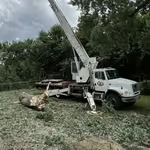
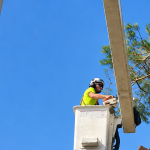
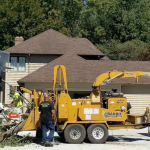
If a storm leaves you with a hazardous tree or property damage in West Michigan, Big Chipper Tree Service LLC is your premier partner for a stress-free recovery. Since 1986, we have specialized in complex, crane-assisted emergency removals, and our deep experience with insurance work means we know exactly what adjusters need to see. We offer a No Cash Up Front policy for insurance-covered projects, handling the billing directly with your provider so you can focus on your family. Big Chipper Tree Service LLC provides a wide range of tree care services such as tree removal, tree pruning and trimming, shrub removal, and trimming, 24/7 emergency tree service, stump removal and grinding, and land clearing.
Our family-owned, BBB A+ rated team provides 24/7 emergency response throughout Grand Rapids, Ada, and the surrounding areas. From detailed damage documentation to final debris hauling and stump grinding, we ensure your property is restored to its pre-storm condition with precision and safety.
Frequently Asked Questions by the Homeowners in Grand Rapids, MI
1. Does insurance cover the cost of stump grinding after a tree falls in Grand Rapids, MI?
Usually, no. Most policies cover the removal of the tree and debris to the point where the property is safe, and the structure can be repaired. Stump grinding is often considered a cosmetic landscape improvement and is rarely included in a standard claim.
2. Is there a limit on how much insurance will pay for tree debris removal in Grand Rapids, MI?
Yes. Many policies have a sub-limit for debris removal, often ranging from $500 to $1,000 per tree. However, if the tree is physically on your house, the cost of lifting it off is often considered part of the dwelling coverage rather than just debris removal.
3. What if a tree falls on my car instead of my house?
This is a common point of confusion. Damage to a vehicle from a fallen tree is covered by the comprehensive portion of your auto insurance policy, not your homeowners’ insurance, even if the car was parked in your driveway.
4. Will my premiums go up if I file a claim for a fallen tree in Grand Rapids, MI?
While every carrier is different, a single Act of God claim is less likely to raise rates than a claim caused by homeowner negligence. However, multiple claims in a short period can affect your standing.
5. Do I need to wait for the adjuster to arrive before moving the tree in Grand Rapids, MI?
If the tree is posing an immediate hazard or blocking access, you can have it moved. Just ensure you have taken extensive photographs and kept all logs and sections of the wood that show the tree’s condition.
6. Does insurance cover trees that fall due to the weight of ice or snow in Grand Rapids, MI?
Yes, the weight of ice and snow is a specifically named peril in most standard Grand Rapids homeowners’ insurance policies. Because West Michigan frequently experiences heavy lake-effect snow and ice storms, this coverage is vital. If the sheer weight of a winter storm causes a limb to snap and damage your roof, it is typically treated the same way as wind damage. However, the same rules regarding maintenance apply—if the tree was already dead and simply couldn’t handle a dusting of snow, you may face challenges with the claim.
7. Can I choose my own tree service, or does the insurance company pick one?
You have the absolute right to choose any licensed and insured contractor to perform work on your property. While some insurance companies have “preferred vendors,” you are not obligated to use them. It is often in your best interest to choose a local, established company like Big Chipper Tree Service LLC that has a long-standing reputation in the Grand Rapids community. Local experts are more likely to be familiar with city-specific tree regulations and typical West Michigan storm damage patterns than a national “storm chaser” company.
8. What happens if a city-owned tree falls on my property in Grand Rapids?
In the City of Grand Rapids, the municipality is generally not held liable for damage caused by city-owned trees (such as those in the parkway or right-of-way) during a major storm event unless it can be proven that the city had “prior notice” of the tree being a hazard. If a city tree falls on your house during a windstorm, you will likely still need to file a claim through your own homeowners’ insurance. Your insurance company may then attempt to recoup the costs from the city if evidence of negligence exists, but for the homeowner, the initial recovery process remains the same.
Summary Checklist: Post-Storm Insurance Actions
| Condition | Risk Level | Recommended Action |
| Tree inside the living space or through the roof | Critical | Evacuate immediately, contact your insurance provider, and schedule emergency crane removal |
| Tree blocking the driveway or access point | Moderate | Document the damage and arrange professional debris clearing as soon as possible |
| Hanging or dangling limbs | High | Keep people away from the area and request a professional hazard assessment |
| Tree fallen in the open yard | Low | Request a removal estimate, as insurance may not cover non-structural damage |
| Neighbor’s tree leaning toward the property | Variable | Notify the neighbor in writing and consult an arborist for a documented risk assessment |
Final Advice
When a storm hits Grand Rapids, dealing with tree damage and insurance claims can quickly become stressful. One of the biggest things homeowners can do is document everything before cleanup starts. Photos, videos, and a detailed estimate from a professional tree service in Grand Rapids can make a major difference when working with your insurance company. It’s also important not to rush into a settlement before understanding the full scope of the removal, cleanup, and possible structural damage.
Regular tree inspections and maintenance can also help prevent larger problems down the road. Healthy, properly maintained trees are less likely to fail during heavy storms, and having records from an arborist may help if questions about property maintenance ever come up.
If a tree does fall, staying safe and calling experienced local professionals is the best next step. Companies with the right equipment, including cranes for large removals, can clear dangerous trees safely while helping prevent additional damage to your home. Working with a trusted tree service in Grand Rapids that understands both storm cleanup and insurance documentation can make the recovery process much smoother.
In the end, being proactive with tree care and organized during the claims process can help reduce stress, speed up repairs, and limit the financial impact after a storm in West Michigan.