Key Takeaways
- Spring combines saturated soil, strong winds, and new leaf weight in ways that raise the risk of tree and limb failure.
- Trees weakened over winter by freeze-thaw stress or storm damage often reach a breaking point once spring conditions add new load.
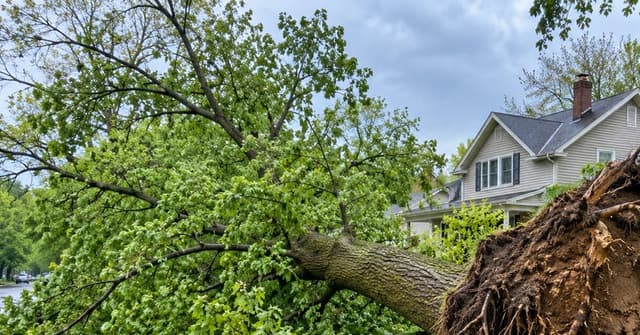
- Saturated soil reduces root anchorage, making trees more prone to uprooting during spring wind events.
- New leaves and rapid spring growth add weight and wind resistance to the canopy at a time when root support may be compromised.
- A pre-spring inspection can identify at-risk trees before severe weather arrives.
Spring in West Michigan often brings a rapid shift from winter dormancy to active growth, and that transition puts unique stress on trees. Unlike a single dramatic storm, spring risk tends to build from several overlapping factors: soil that has been saturated by melting snow and heavy rain, winds that pick up as frontal systems move through, and a canopy that is rapidly adding leaf weight and wind resistance after months of bare branches.
Grand Rapids, Michigan homeowners often notice this pattern most clearly after a stretch of unsettled spring weather, when a tree that seemed perfectly stable through an entire winter suddenly loses a large limb during what looks like an unremarkable afternoon storm. The explanation usually lies in the combination of factors building underneath the surface, rather than any single dramatic event.
Individually, each of these factors is manageable for a healthy tree. Combined, especially for a tree already carrying some structural weakness from the previous winter, they can be enough to cause a limb or entire tree to fail.
This is also the time of year when severe thunderstorms and straight-line winds become more frequent in West Michigan, adding sudden, high-force events on top of the gradual stress already building in the soil and canopy.
Saturated Soil and Root Stability
Grand Rapids soils, especially in low-lying or heavy-clay areas, can hold significant moisture after a wet winter and early spring rains. Saturated soil is less able to hold a tree’s root system firmly in place, since waterlogged ground offers less resistance than firm, well-drained soil.This is why uprooted trees are more common during spring wind events than similar wind speeds might cause later in a drier summer.
- A tree that has stood through winter winds without issue can become vulnerable once its root zone is sitting in saturated ground.
- Homeowners sometimes notice this pattern indirectly, through subtle changes like soil cracking near the trunk’s base or slight shifts in a tree’s lean after a particularly wet stretch, both of which are worth treating as early warning signs.
- Trees with shallow or previously restricted root systems, such as those planted in compacted yards or near driveways, tend to be affected first, since they have less soil volume to draw on for stability once the surrounding ground becomes waterlogged.
- Low-lying yards and properties near creeks or drainage swales are particularly susceptible to this kind of prolonged saturation, since water has nowhere to drain quickly.
- Homeowners in these areas may want to pay closer attention to tree stability each spring, especially following an unusually wet winter.
- Improving drainage around a vulnerable tree, such as regrading a low spot or adding a French drain, can meaningfully reduce how long soil stays saturated after heavy rain, which in turn helps preserve root anchorage during the highest-risk weeks of spring.
New Leaf Growth Adds Weight and Wind Resistance
As trees leaf out in spring, their canopies rapidly gain both weight and surface area. A bare branch that offered little resistance to winter wind becomes a much larger sail once covered in new leaves, transferring far more force to the limb, trunk, and root system during a spring wind event.
- The sudden increase in wind load, arriving before the tree has had a chance to fully re-establish its dormant-season root growth, is one of the primary reasons spring storms cause more limb and tree failures than comparable wind events at other times of year.
- Trees that leaf out earlier than their neighbors, whether due to species or microclimate, can be at somewhat greater relative risk during this window, simply because they’re carrying full canopy weight while nearby trees are still bare and experiencing less wind resistance.
- The rate at which a tree leaves out can also vary from year to year depending on temperature patterns, meaning the highest-risk window isn’t always the same calendar date, which is one more reason a fixed pruning or inspection schedule is less reliable than paying attention to actual seasonal conditions.
Winter Damage That Wasn’t Addressed
Many trees carry hidden weaknesses into spring from freeze-thaw cycles, ice accumulation, or minor storm damage that occurred over the winter months.
- Cracks, loosened root plates, and weakened branch unions that didn’t fail during winter can reach their breaking point once spring adds new stress on top of existing damage. This is one of the strongest arguments to hire a professional tree service firm in Grand Rapids, MI to conduct thorough tree inspection in late winter or very early spring, before storm season is in full swing, so that developing problems can be addressed while the risk is still manageable.
- Homeowners who notice cracked bark, a new lean, or unusual limb movement during winter storms should treat those observations as a reason to schedule an inspection promptly, rather than waiting to see whether the tree simply recovers on its own.
Species and Site Factors That Increase Risk
Some tree species are more prone to spring failure than others.
- Fast-growing trees like silver maple and Bradford pear tend to have weaker wood and more bark unions, making them more likely to lose limbs in spring wind. Trees growing in compacted urban soil, near recent construction, or in areas with poor drainage are also at elevated risk, since their root systems may already be under stress before spring weather arrives.
- Trees standing alone in an open yard, without the wind buffering that a group of trees can provide for one another, are also somewhat more exposed during spring storms, which is a factor worth considering when planning new plantings or evaluating an existing landscape.
What Homeowners Can Do
Scheduling a professional tree inspection before spring storm season, addressing any deadwood or structural weaknesses identified, and improving drainage around vulnerable trees are all practical steps homeowners can take. Removing or reducing risk from trees with a known history of storm damage is generally far less costly than dealing with the aftermath of an unexpected failure near a home, driveway, or power line.
Keeping an eye on the forecast during active spring storm systems, and avoiding yard work directly beneath large trees during high-wind warnings, is also a simple but effective way to reduce personal risk while longer-term corrective work is scheduled.
Big Chipper Tree Service can assess trees for weak branches, structural defects, root stability, and signs of winter damage. We can recommend pruning, cabling, or removal when a tree poses a potential hazard to your home or property. Our team can also address storm-damaged or weakened trees before they become more dangerous.
With experienced crews and professional equipment, we can safely handle trees near homes, driveways, utilities, and other structures. A pre-season inspection from Big Chipper Tree Service can help identify problems while there is still time to address them.
Frequently Asked Questions About Spring Tree Fall Risk in Grand Rapids, Michigan
Why do more trees fall in spring than in winter?
Spring combines saturated soil, new leaf weight, and increased wind resistance, all of which add stress to a tree’s structure at a time when its root system may already be weakened from winter conditions.
How does saturated soil affect tree stability?
Waterlogged soil provides less resistance to root movement, making trees more prone to leaning or uprooting during strong spring winds compared to when the ground is firm and well-drained.
Are certain tree species more likely to fail in spring?
Yes. Fast-growing species with weaker wood, such as silver maple and Bradford pear, tend to be more prone to limb and structural failure during spring storms than slower-growing hardwoods.
When is the best time to inspect trees before spring storms?
Late winter or very early spring, before leaf-out and before storm season intensifies, gives homeowners the best opportunity to address developing risks before conditions worsen.
Can Big Chipper help assess spring storm risk on my property?
Yes. Big Chipper can inspect trees for structural weaknesses, root stability concerns, and species-specific risk factors ahead of spring storm season.
Summary Checklist: Spring Tree Fall Risk & Assessment
| Evaluation Area | What to Confirm |
| Soil saturation | Drainage conditions around vulnerable trees |
| Winter damage | Unaddressed cracks, deadwood, or root plate movement |
| Canopy density | Amount of new leaf growth adding wind resistance |
| Species risk | Known vulnerability of specific trees to spring failure |
| Proximity to structures | Trees positioned near homes, driveways, or power lines |
| Inspection timing | Pre-storm-season assessment scheduled |
| Corrective action | Pruning, cabling, or removal recommendations addressed |
Reviewed by a Certified Arborist
This article has been reviewed by a certified arborist for general accuracy regarding seasonal tree-risk factors and spring storm preparation practices.