“How much will this cost?” is usually the first question homeowners ask, and it’s also the hardest one to answer with a single number over the phone. Two trees that look similar from the curb can cost very differently to remove, depending on details that aren’t obvious until someone actually looks at the site.
This page breaks down what actually drives tree service pricing, what a professional estimate accounts for, and why the same-looking job can land at very different prices depending on a handful of specific factors.
What Determines the Cost of Tree Service?
Tree service pricing is driven mainly by tree size, species, condition, and how accessible the site is, with additional cost added for storm damage, power line proximity, or emergency timing. National data compiled by Angi puts typical tree removal costs between $200 and $2,000, averaging around $750, but that range moves a lot once you factor in the specifics of an individual tree and property.
Size and Trunk Diameter
Height is the most visible cost driver, but trunk diameter matters just as much. A wider trunk takes longer to cut through and produces more wood to process and haul away, and cutting time roughly scales with the cross-sectional area of the trunk, not just its diameter number. That’s why a 30-inch oak can cost meaningfully more than a 15-inch tree of similar height, even though the diameter difference sounds modest.
Accessibility and Site Conditions
This is often the single biggest swing factor on a large removal, bigger than the tree’s size alone.
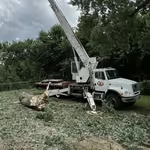
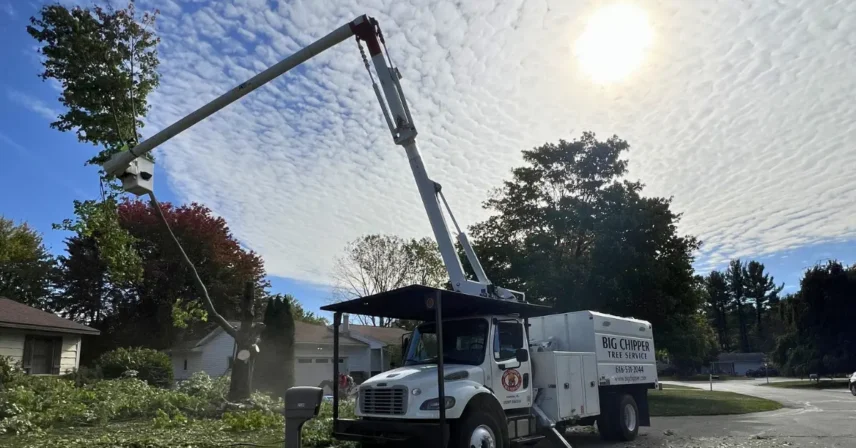
A tree standing in an open yard can usually be felled in one controlled drop. A tree positioned over a house, pool, driveway, or fence has to be dismantled in sections instead, with each piece lowered by rope or lifted out by crane, which takes more time, more crew, and often more specialized equipment. Tight side yards that block truck or crane access add further cost, since the crew has to plan a different approach or bring in additional gear.
Tree Condition and Species
A dead or storm-damaged tree isn’t automatically cheaper to remove, even though there’s no live wood to fight through. Unpredictable, brittle branches and compromised structural integrity actually require more caution and time, not less. Species matters too. Trees with dense wood or extensive root systems generally take longer to process than softer, more straightforward species.
Power Lines and Utility Proximity
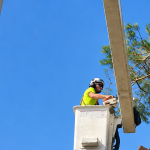
Any tree touching or growing near a power line requires coordination with the utility company and often a line-clearance qualified crew, which adds both time and cost. This isn’t a step that can be skipped for a lower price. It’s a safety requirement that changes how the job has to be planned and staffed.
Timing: Scheduled Work vs. Emergency Response
Scheduled tree removal or pruning can be planned around the most efficient crew size, equipment, and route to the site. Emergency tree service for a tree that’s already down or actively hazardous typically costs more, since it requires immediate crew mobilization, often outside normal hours, with less ability to plan the most efficient approach in advance. HomeGuide’s cost data reflects this same pattern nationally, with complex or urgent removals landing well above routine, scheduled jobs.
What a Professional Estimate Actually Accounts For
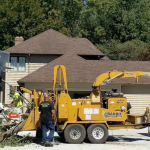
A real, on-site estimate isn’t a guess based on a phone description. It typically covers the tree’s height and trunk diameter, its condition and species, how accessible the site is for equipment, whether stump grinding or full debris haul-away is included, and any complicating factors like power lines or proximity to structures. Two “medium oak” jobs can land at very different prices once all of these are factored in, which is exactly why in-person estimates exist instead of flat online pricing.
This is also why reputable tree companies don’t publish a fixed price list the way a lawn-mowing service might. ISA-certified arborists are trained to evaluate a tree’s condition and risk factors on-site, not from a photo or a phone description, since features like internal decay, root plate stability, or a hidden lean often aren’t visible from the street. A number generated without that inspection isn’t really an estimate. It’s a guess with a dollar sign in front of it.
What Typically Shifts a Price Up or Down
| Factor | Effect on Price |
| Open yard, easy truck access | Lower cost |
| Tight side yard or crane-only access | Higher cost |
| Tree over a house, driveway, or fence | Higher cost (sectional removal required) |
| Power lines in or near the canopy | Higher cost (specialized crew required) |
| Dead, storm-damaged, or leaning tree | Higher cost (added caution and complexity) |
| Scheduled, planned appointment | Lower cost than emergency response |
| Stump grinding and full debris haul-away included | Added cost, but avoids a second service call |
What to Have Ready Before Your Estimate
- The general size of the tree (roughly how tall, and how it compares to your house)
- Whether it’s near power lines, a structure, a fence, or another tree
- Whether the tree is dead, leaning, storm-damaged, or otherwise concerning
- Whether you want stump grinding and debris removal included
- Access notes, like a narrow driveway or gated side yard, that a crew should know about in advance
Key Takeaways
- Tree size and trunk diameter are the starting point for pricing, but they’re rarely the deciding factor on their own.
- Site access, especially whether a tree overhangs a structure, often swings the price more than the tree’s size does.
- A dead or storm-damaged tree can cost more to remove than a healthy one of the same size, not less.
- Power line proximity requires specialized handling that adds cost but isn’t optional to skip.
- Emergency response typically costs more than scheduled work, since it requires immediate mobilization.
Frequently Asked Questions
Why can’t I get an exact price over the phone?
Because the details that matter most, trunk diameter, exact access conditions, canopy overhang, and site hazards, usually aren’t visible or describable accurately over a phone call. An accurate quote requires someone to actually look at the tree and the property.
Does stump grinding cost extra, or is it usually included?
Stump grinding is typically a separate line item from removal, since not every customer wants it done at the same time. Bundling it into the same visit is usually more cost-effective than scheduling a separate trip later.
Is emergency tree removal always more expensive than scheduled work?
In most cases, yes. Emergency response requires mobilizing a crew quickly, often outside normal business hours, with less ability to plan the most efficient equipment and route. Scheduled work can be planned around the most cost-effective approach.
Will removing a dead tree cost less since there’s no live wood?
Not usually. Dead and storm-damaged trees often require more caution due to unpredictable, brittle wood and compromised structure, which can add time and complexity rather than reduce it.
Does tree removal near power lines always cost more?
Generally yes, since work near power lines requires coordination with the utility and often a specially qualified crew, which adds both planning time and labor cost regardless of the tree’s size.
How can I get an accurate estimate for my property?
The most reliable way is an on-site visit where a crew can assess the tree’s size, condition, and access in person. You can request a free estimate from Big Chipper for tree removal, trimming, stump grinding, or emergency work anywhere in Grand Rapids and the surrounding area.
Get a Clear, No-Surprise Estimate
Pricing that seems too good to be true over the phone usually leaves out something that shows up on the invoice later, whether that’s stump grinding, debris haul-away, or an access challenge nobody accounted for. An honest estimate looks at the actual tree and the actual property before putting a number on the job.
Big Chipper Tree Service provides free, on-site estimates throughout Grand Rapids and Kent County for removal, trimming, stump grinding, and emergency work. Request your estimate and know exactly what you’re paying for before any work begins. New customers can also save 10% on tree services over $2,500.