Key Takeaways
- Oak wilt kills red oaks in Grand Rapids within 4 to 6 weeks of visible symptoms and spreads through underground root grafts and sap-feeding beetles.
- Never prune oaks between April 15 and July 15 in Michigan, the highest-risk window for oak wilt transmission.
- Apple scab defoliates crabapples and apples by midsummer in wet Grand Rapids springs. Sanitation plus properly timed fungicide is the proven control.
- Both diseases are managed, not cured, once advanced. Early identification is the difference between saving and losing the tree.
- The Michigan Department of Natural Resources has confirmed oak wilt in more than 60 of Michigan’s 83 counties, including Kent County.
Grand Rapids homeowners notice it in late June or early July. The crown of a healthy red oak suddenly starts dropping leaves. A crabapple that bloomed beautifully in May looks half bare by August, with black spots running down the foliage. Two completely different diseases, both common across Kent County, both capable of taking out signature trees if you wait too long to act.
This guide walks through how to spot oak wilt and apple scab on your property, what is happening inside the tree, and the treatment options that work in West Michigan’s climate.
Oak Wilt: The Fast-Moving Killer of Red Oaks in Kent County
Oak wilt is caused by the fungus Bretziella fagacearum. According to the Michigan Department of Natural Resources, the disease has been confirmed in more than 60 of Michigan’s 83 counties and is one of the most destructive shade tree diseases in the state.
It spreads two ways here. Above ground, sap-feeding beetles carry spores from infected trees to fresh pruning wounds. Below ground, the fungus moves through root grafts where the roots of neighboring oaks have fused together.
Red oak group trees, which include northern red oak, pin oak, and black oak, can die within four to six weeks of infection. White oaks are more resistant and may decline slowly over years.
How to Identify Oak Wilt Symptoms on Red Oaks
Watch the canopy from late spring through midsummer. The signs:
- Leaves wilt from the outer edge inward, turning bronze or brown while still partly green near the base
- Wilted leaves drop while still showing some green color, a key tell that separates oak wilt from most other problems
- Leaf loss starts at the top of the canopy and works down
- Brown streaking may appear in the sapwood when a small branch is cut
Symptoms usually appear in June, July, or August. By the time the crown is half bare, the tree is typically beyond saving.
Why Oak Wilt Spreads Fast in Grand Rapids Neighborhoods
Older Grand Rapids neighborhoods like East Grand Rapids, Heritage Hill, and Cascade Township were planted with rows of red oaks decades ago. Those root systems have grown into each other underground. When one tree gets infected, the fungus moves silently from root to root, killing entire clusters before homeowners realize what is happening.
Storm damage from spring thunderstorms creates fresh wounds that attract the beetles carrying spores. That is why pruning between April 15 and July 15 is risky in Michigan, and why Michigan State University Extension recommends keeping oak pruning to the dormant season.
Oak Wilt Treatments That Give Nearby Trees a Chance
Once a red oak shows wilt symptoms, the tree itself is rarely saveable. Treatment focuses on protecting nearby oaks:
- Root graft disruption: A vibratory plow trenches between trees five feet deep to sever underground root connections. This must happen before symptoms appear in neighboring oaks.
- Fungicide injection: Propiconazole injected into the root flare of healthy nearby oaks can protect them for up to two years. This works as prevention, not as a cure for already infected trees.
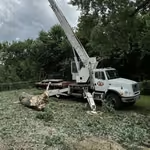
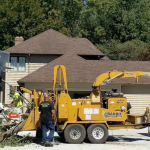
- Proper removal: Infected trees must be cut down and the wood handled carefully (chipped, debarked, or buried) because spore mats can form on dead wood and continue infecting beetles. Our tree removal service follows MDNR handling guidance for oak wilt wood.
Apple Scab: The Disease That Strips Crabapples Bare
Apple scab is caused by the fungus Venturia inaequalis. It hits ornamental crabapples and edible apples alike. According to MSU Extension, Michigan’s wet, humid springs create nearly perfect conditions for it.
How to Identify Apple Scab on Crabapples and Apples
Look at the leaves and fruit starting in May:
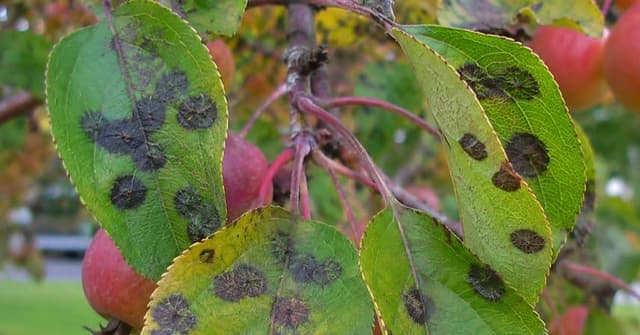
- Olive green to black velvety spots on leaves, usually round
- Spots that grow and merge until leaves yellow and drop
- Heavy defoliation by July or August on susceptible varieties
- Corky, rough black scabs on fruit
- Twig lesions on highly infected trees
A crabapple that loses 60 to 80 percent of its leaves by midsummer is almost always dealing with scab. Repeated severe infections weaken the tree over multiple seasons, making it vulnerable to winter dieback and other stressors.
Why Apple Scab Is So Common in West Michigan
West Michigan springs deliver exactly what the fungus needs: cool temperatures, prolonged leaf wetness, and rain. Spores overwinter on fallen leaves and release in spring, splashing up onto new growth. By the time you notice the first spots, infection has already happened. You are seeing the result of weather from weeks earlier.
Apple Scab Treatment Plan That Actually Works
Apple scab is managed, not cured. The treatment plan:
- Sanitation: Rake and remove fallen leaves in fall. This is the single most effective free thing you can do. It removes the overwintering source.
- Fungicide timing: Protective fungicides applied at bud break, then at 7 to 14 day intervals through petal fall, protect new tissue. Timing is everything. Sprays applied after symptoms appear do not help.
- Resistant varieties: If a crabapple is scabbing out every year, replacement with a resistant cultivar like Prairifire, Adirondack, or Sugar Tyme is often more cost effective than annual fungicide programs.
- Pruning for airflow: Open canopies dry faster after rain. Less leaf wetness means less infection pressure. Our tree pruning and trimming service opens canopies to ANSI A300 standards.
Oak Wilt vs. Apple Scab: Quick Comparison
| Factor | Oak Wilt | Apple Scab |
|---|---|---|
| Trees affected | Red, pin, black, white oaks | Crabapples, apples |
| Speed of damage | 4 to 6 weeks (red oaks) | Season by season decline |
| Visible symptom | Bronzed, wilted leaves dropping green | Black spots, midsummer defoliation |
| Spread method | Beetles + root grafts | Airborne spores, fallen leaves |
| Pruning risk window | April 15 to July 15 | Year round low risk |
| Cure available | No, prevention only | No, managed annually |
| Lifesaving treatment | Root trenching + fungicide | Sanitation + timed fungicide |
What We Commonly See In The Field
Oak wilt calls come in waves, usually mid-July, after homeowners notice leaf drop that does not match anything they have seen before. Often the tree is already too far gone, but the bigger oak next to it can still be saved if we move quickly on root graft disruption.
Apple scab calls peak in August when crabapples look skeletal. By that point, the season’s damage is done. The conversation shifts to fall cleanup and next spring’s fungicide schedule.
The most common mistake seen: homeowners pruning oaks in June because a branch looks dead, not realizing they have just opened a wound during peak beetle activity. Three weeks later the whole canopy is wilting.
Immediate Steps If You Suspect Oak Wilt
- Avoid all pruning between April 15 and July 15
- If a storm breaks an oak branch in that window, paint the wound immediately with tree wound sealer. This is the one exception where sealer is recommended
- Watch your red oaks each July for sudden wilt symptoms
- Photograph symptoms and call a certified arborist within days, not weeks
If high winds or storm damage have already broken oak branches in summer, our emergency tree service can respond fast.
Immediate Steps If You Suspect Apple Scab
- Rake and bag fallen leaves in autumn. Do not compost them
- Plan fungicide applications starting at bud break next spring if your tree has a history of scab
- Consider whether replacement with a resistant variety is the better long term answer
Frequently Asked Questions
How fast does oak wilt kill a tree in Michigan?
Red oaks can die within four to six weeks of visible symptoms. White oaks may survive multiple seasons with the disease.
Can I prune my oak tree in summer in Grand Rapids?
No. Avoid all oak pruning between April 15 and July 15. The Michigan Department of Natural Resources recommends pruning only during dormancy, typically November through March.
Is apple scab dangerous to humans or pets?
No. It only affects the tree and the fruit’s appearance. The fruit is still safe to eat, though usually disfigured.
Why did my crabapple lose all its leaves by August?
Severe apple scab infection is the most likely cause in Grand Rapids. Wet spring weather feeds the fungus, and susceptible cultivars defoliate heavily by midsummer.
Will fungicide save my red oak that already has wilt symptoms?
Once symptoms appear, treatment of the infected tree itself rarely works. Fungicide is used to protect neighboring oaks before they are infected.
Do I need to remove a tree killed by oak wilt right away?
Yes, ideally before the next spring. Dead oak wood can develop fungal mats that continue spreading the disease to beetles.
Which Grand Rapids neighborhoods are highest risk for oak wilt?
Any neighborhood with mature red oak populations planted closely together. East Grand Rapids, Heritage Hill, Cascade Township, and Forest Hills all have higher risk due to the density of mature red oaks.
When to Call a Certified Arborist
Oak wilt is a same week call. If you see sudden summer wilt on a red oak, fast action on neighboring trees is the difference between losing one tree and losing five. A certified arborist verifiable through the International Society of Arboriculture directory should perform diagnosis and treatment.
Apple scab is a planning call. The work happens in fall (sanitation) and early spring (fungicide timing), not in the middle of an outbreak.
For homeowners across Grand Rapids, Grandville, and Wyoming, Big Chipper Tree Service offers diagnosis and treatment by certified arborists.