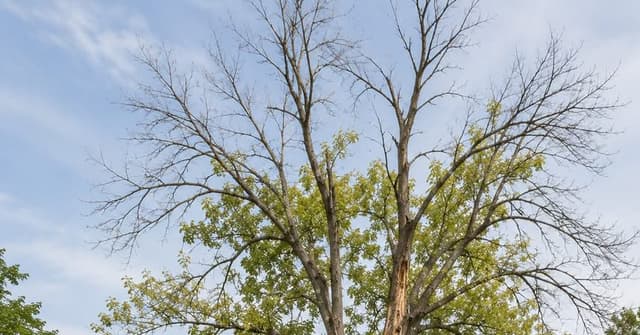
Key Takeaways
- Emerald ash borer has killed an estimated tens of millions of ash trees across the Midwest since arriving in Michigan in 2002.
- Oak wilt has been confirmed in over 60 of Michigan’s 83 counties, including Kent County.
- The fastest-moving threats (EAB, oak wilt, Dutch elm) demand a same-week diagnosis to save neighboring trees.
- Cosmetic diseases like tar spot rarely harm tree health but can signal stress that compounds other problems.
- Most tree diseases are managed, not cured. Early identification is the single largest factor in outcomes.
Trees in Kent County face a long list of diseases and pests, and most homeowners do not recognize the early signs until significant damage is already underway. The mature tree canopy across Grand Rapids (oaks in East Grand Rapids, maples lining the streets in Eastown, ashes in older subdivisions, beeches in wooded lots) represents decades of growth that can be lost in a single season if the wrong problem goes untreated.
This guide covers the 7 most common tree diseases and pests across Grand Rapids in 2026, with short identification summaries and what to do next.
For deeper coverage of oak wilt and apple scab specifically, see our companion guide: Oak Wilt and Apple Scab in Grand Rapids.
1. Emerald Ash Borer (EAB)
The single most destructive tree pest in Michigan history. According to the USDA Forest Service, EAB was first identified in Southeast Michigan in 2002 and has since killed tens of millions of ash trees across more than 30 states.
Identifying Symptoms
- Canopy thinning starting at the top of the tree
- D-shaped exit holes about 1/8 inch wide on the bark
- S-shaped serpentine galleries under the bark
- Bark splits and epicormic sprouts at the base of the tree
- Heavy woodpecker activity on the trunk
What to Do
If 30 percent or less of the canopy is affected, systemic insecticide injection (emamectin benzoate) every two years can save the tree. Past that threshold, structural decline is usually too advanced, and tree removal becomes the safer call. Untreated ashes become brittle quickly and pose a significant hazard risk.
2. Oak Wilt
According to the Michigan Department of Natural Resources, oak wilt is confirmed in more than 60 Michigan counties and remains one of the state’s most destructive shade tree diseases.
Identifying Symptoms
- Sudden wilting and bronzing of leaves starting at branch tips, usually from June to August
- Leaf drop while leaves are still partly green
- Symptoms move from the top of the canopy downward
- Red oaks die within weeks; white oaks decline more slowly
What to Do
Infected red oaks are rarely saveable once symptoms appear. Protect nearby oaks through root graft trenching and preventive fungicide injection. Avoid pruning oaks from April 15 through July 15. Full details in our oak wilt and apple scab guide.
3. Dutch Elm Disease
Still active in Michigan despite the devastation of the 1960s and 70s. Caused by a fungus carried by elm bark beetles.
Identifying Symptoms
- Yellowing and wilting of leaves on individual branches, often starting on one side of the tree (flagging)
- Brown streaking in the sapwood when bark is peeled back from a wilting branch
- Progressive death of branches over a single growing season
- Spread can also occur through root grafts in closely spaced elms
What to Do
Early detection allows pruning out affected branches well below visible streaking. Preventive fungicide injection (propiconazole) protects healthy elms in high risk areas. Heavily affected trees usually cannot be saved.
4. Beech Bark Disease
A combination problem: beech scale insect followed by Neonectria fungus. Has been moving through Michigan’s beech population over the last two decades, according to MSU Extension.
Identifying Symptoms
- White, woolly patches on the bark (the scale insect)
- Sunken, oozing cankers on the trunk
- Crown dieback and “beech snap” (sudden structural failure of weakened trunks)
- Eventual tree death over 5 to 10 years
What to Do
Insecticide treatment for beech scale can slow the disease in high value individual trees. Heavily affected trees in residential settings often need removal due to structural failure risk. Resistant beech selections are being developed but are not widely available yet.
5. Apple Scab
A fungal disease (Venturia inaequalis) that hits crabapples and apples hard in our wet springs. The most widespread cosmetic disease in Grand Rapids landscapes.
Identifying Symptoms
- Olive green to black velvety spots on leaves starting in May
- Yellowing and early leaf drop, often defoliating by midsummer
- Corky black scabs on fruit
- Weakened trees over multiple seasons
What to Do
Rake fallen leaves to break the overwintering cycle. Apply protective fungicides starting at bud break with repeat applications every 7 to 14 days through petal fall. Severely susceptible cultivars are often best replaced with resistant varieties like Prairifire, Adirondack, or Sugar Tyme. Full protocol in our oak wilt and apple scab guide.
6. Verticillium Wilt
Soil borne fungus that affects maples (especially Norway and silver), ashes, redbuds, and many other species.
Identifying Symptoms
- Sudden wilting of leaves on individual branches
- Olive green or dark streaking in the sapwood
- Branch dieback that may progress over years or be acute
- Symptoms often appear on only part of the tree
What to Do
No cure exists. Management focuses on stress reduction: proper watering, mulching, pruning out affected branches, and avoiding wounds. Some trees can wall off the infection and live for many years. Replacement species should be selected from verticillium resistant lists published by MSU Extension.
7. Anthracnose
A group of fungal diseases affecting sycamores, maples, oaks, ashes, and dogwoods. Wet, cool springs in Grand Rapids create ideal conditions.
Identifying Symptoms
- Irregular brown or black blotches on leaves, often following the veins
- Leaf curling and distortion
- Premature leaf drop in spring
- Twig dieback in severe infections, especially on sycamores
What to Do
Most healthy trees recover from anthracnose without intervention. Rake fallen leaves to reduce overwintering inoculum. Trees with repeated severe infections may benefit from preventive fungicide programs and pruning to improve airflow. Our tree pruning service handles canopy thinning for airflow improvement.
Tree Disease Identification Chart for Grand Rapids
| Disease | Trees Affected | Speed | Saveable? | Best Action |
| Emerald Ash Borer | Ash | 3 to 5 years | Yes, if detected early | Inject when canopy damage is under 30% |
| Oak Wilt | Red, pin, black, and white oaks | 4 to 6 weeks (red oaks) | Rarely, once symptoms are visible | Protect neighboring trees and limit spread |
| Dutch Elm Disease | American elm | 1 season | Sometimes | Prune infected limbs and use preventive injections |
| Beech Bark Disease | American beech | 5 to 10 years | Can often only be slowed | Treat scale insects and monitor tree health |
| Apple Scab | Crabapple and apple | Seasonal | Yes, with proper management | Leaf sanitation and fungicide applications |
| Verticillium Wilt | Maple, ash, and redbud | Variable | Possibly | Reduce tree stress and provide supportive care |
| Anthracnose | Sycamore, maple, and oak | Typically one spring season | Yes, in most cases | Improve sanitation and increase airflow through pruning |
What We Commonly See In The Field
Patterns are predictable across the seasons. Spring brings anthracnose calls when wet weather sets in. Mid summer is oak wilt season, with red oaks in older neighborhoods showing the textbook bronze wilt pattern. Late summer brings the EAB confirmations on ashes that have been declining for two or three years. Fall brings the apple scab cleanup conversations.
The single most common mistake: homeowners googling symptoms, settling on a self-diagnosis, and applying treatments aimed at the wrong disease. Verticillium wilt and Dutch elm disease can look similar at a glance. Oak wilt and drought stress can both cause summer leaf browning. Anthracnose and tar spot are both leaf-spotting diseases on maples with very different management priorities.
A proper diagnosis from a certified arborist usually pays for itself by preventing wasted treatments.
What Grand Rapids Homeowners Should Do First
When you spot trouble:
- Take dated photos of symptoms, both close-up and full tree shots
- Note when symptoms first appeared and how fast they have progressed
- Check whether nearby trees of the same species show similar signs
- Avoid heavy pruning until you have a diagnosis (cutting can spread some diseases)
What not to do:
- Do not apply random fungicides hoping something works
- Do not prune oaks during the growing season unless absolutely necessary
- Do not ignore symptoms hoping they will resolve on their own. Most tree diseases worsen.
Frequently Asked Questions
What is the most common tree disease in Grand Rapids?
Apple scab on crabapples and tar spot on maples are the most widespread fungal diseases by sheer numbers. Oak wilt and emerald ash borer cause the most tree deaths in Kent County.
Can I treat tree diseases myself?
Some preventive cultural practices (raking diseased leaves, proper watering, mulching) can be done by homeowners. Most fungicide and insecticide treatments for serious diseases require professional application and proper diagnosis to be effective.
How do I know if my ash tree can still be saved from EAB?
If less than 30 percent of the canopy shows dieback, systemic injection treatment has a strong chance of success. Past that point, removal is usually the safer option.
Are tree diseases contagious between species?
Some are species specific (oak wilt affects only oaks, Dutch elm only elms). Others like verticillium wilt and anthracnose affect many species. Identification matters for understanding the spread risk.
Will fall sanitation really stop apple scab?
It reduces it significantly. The fungus overwinters on fallen leaves, so removing them before spring removes most of the next season’s spore source.
Should I remove a tree that has a serious disease?
It depends on the disease, the percentage of damage, the location of the tree, and whether nearby trees are at risk. A certified arborist can give you a clear recommendation based on inspection.
What is the difference between EAB and Dutch elm disease?
EAB is an insect (a beetle) that tunnels through ash trees. Dutch elm disease is a fungal infection of elms spread by bark beetles. Different trees, different organisms, different treatments.
How can I tell if my tree has oak wilt or just drought stress?
Oak wilt causes leaves to drop while still partly green, with symptoms moving from the top of the canopy down. Drought stress usually shows uniform browning across the whole tree. A certified arborist can confirm with a branch cut showing sapwood streaking.
When to Call a Certified Arborist in Grand Rapids
The fastest-moving threats (oak wilt, Dutch elm disease, late-stage EAB) are time-sensitive. Days and weeks matter. Slower-moving issues like verticillium wilt, beech bark disease, or chronic anthracnose give more planning time but still benefit from professional assessment to confirm what you are actually dealing with.
Big Chipper Tree Service provides diagnosis and treatment across Grand Rapids, Grandville, Wyoming, Jenison, and the broader West Michigan area.