The moment a tree comes down isn’t the end of the danger. It’s often the start of a second, quieter problem that keeps getting worse for every hour it sits untouched.
This article covers what actually happens to a property in Grand Rapids in the hours after a tree fails, why “the worst is over” is usually the wrong read on the situation, and what fast response actually prevents.
Key Takeaways
- Fast response helps prevent additional structural damage and water intrusion.
- Hung-up trees can be more dangerous than fully fallen trees.
- Quick action supports insurance claims and reduces repair costs.
- Professional crews identify hazards before starting removal.
- Acting quickly protects your home, your safety, and your property.
What Does Fast Response After a Tree Failure Actually Prevent?
Fast response after a tree failure prevents secondary damage from continued shifting, water intrusion, and structural settling, while also protecting a homeowner’s ability to recover the full cost through insurance. The tree itself is only part of the risk. What it keeps doing after it falls is the other part.
Why “It Already Fell” Doesn’t Mean It’s Done Moving
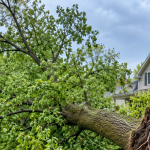
Most people assume a fallen tree is a static problem, wood lying still on the ground or on a roof, waiting to be cut up and hauled away. In practice, a freshly fallen tree is often still under load.
A trunk resting across a roofline continues to settle as branches compress, the wood shifts under its own weight, and any wind adds new movement to an already unstable pile. Every hour that section sits there, it’s working itself deeper into shingles, decking, or gutters, turning what could have been a contained repair into a larger one.
The Loaded Spring Problem
Here’s the insight most homeowners never hear: a “hung-up” tree, one caught in the branches of a neighboring tree instead of hitting the ground, is often more dangerous than one that already fell flat.
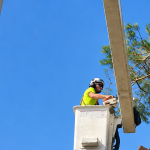
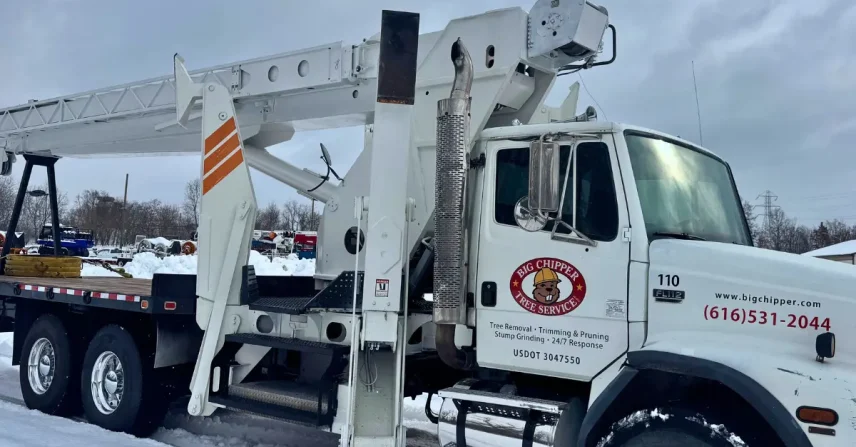
Think of it like a compressed spring balanced on its side. It looks stable sitting there, but the stored energy hasn’t gone anywhere. A hung-up tree is holding tension in its branches and root plate the same way, and a gust of wind, a bird landing on it, or someone walking underneath can be enough to release that energy suddenly. Professionals call these “widowmakers” for a reason, and they often require crane-assisted removal rather than a standard climbing approach, since lifting the load out avoids adding any new force to an already unstable tree.
Why Every Hour of Delay Adds Real Cost
The cost of a tree failure rarely stays fixed while you wait. It tends to climb.
Wood that’s freshly down is far easier to rig and remove than wood that’s settled into a roofline or fence over several days, especially with heavy equipment that can lift a section clear before it settles further. Moisture works its way into any breach in the roof or siding almost immediately, and mold and rot can start well before a formal repair crew ever shows up. On top of the physical damage, unstable branches and root plates become less predictable the longer they’re exposed to wind and weather tracked by the National Weather Service’s Grand Rapids office, not more.
What Fast-Response Crews Actually Look For First
A trained crew doesn’t start cutting the moment they arrive. The first several minutes are spent reading the situation.
That means identifying whether the tree or any limb is still under tension, checking for contact with power lines before anything else happens, and evaluating whether the structure underneath, a roof, deck, or garage, can safely bear the current load while the tree is being removed. This triage step is what keeps a bad situation from becoming a worse one.
Triage: How Severity Shapes the Response
| Situation | Typical Response |
| Tree fully down, clear of structures and power lines | Scheduled removal, often within 24 to 72 hours |
| Tree resting on a roof, garage, or deck | Priority response, same-day in most cases |
| Tree contacting or near power lines | Immediate response, coordinated with the utility |
| Hung-up tree caught in neighboring branches | Immediate response, treated as high-risk |
| Large limb blocking a driveway or road | Priority response for access, full removal to follow |
What to Do in the First Hour After a Tree Fails
- Keep people and pets away from the tree and anything it’s touching, including power lines
- If any part of the tree is in contact with a power line, call the utility company immediately before doing anything else
- Take photos of the damage from multiple angles before any cleanup begins
- Avoid walking under or climbing on a tree that’s hung up in another tree’s branches
- Call a professional crew rather than attempting removal with a homeowner chainsaw, especially for anything resting on a structure
How a Professional Crew Documents the Damage For You
Fast response isn’t just about getting the tree off the property. A crew that’s handled hundreds of storm calls also knows what an insurance adjuster will need to see later.
That typically means photographing the damage from multiple angles before any cutting begins, providing a written assessment of what failed and why, and keeping records of exactly when the call came in and when the crew arrived on scene. Homeowners rarely think to gather all of this themselves in the middle of an emergency, and a company that builds documentation into the response, rather than treating it as an afterthought, makes the eventual claims process noticeably smoother.
Why Insurance Companies Care About Response Time
Most homeowner policies expect what’s often called a “duty to mitigate,” meaning the policyholder is expected to take reasonable steps to prevent further damage once an incident occurs. This doesn’t mean every delay results in a denied claim, and specific terms vary significantly by policy and insurer, but documented, prompt action generally supports a smoother claims process, while waiting several days on a tree resting against your home can complicate coverage for damage that develops during that gap. Photographing the scene immediately and keeping records of when you called for help both help protect your claim regardless of how quickly a crew can physically arrive.
Frequently Asked Questions
How quickly should I call for emergency tree removal?
If a tree is on a structure, blocking your only access route, or touching a power line, call immediately. For a tree that’s down but stable and away from structures, same-day or next-day contact is still recommended, both for safety and to support any insurance documentation.
Is a hung-up tree more dangerous than one that’s fully fallen?
Often, yes. A hung-up tree still holds stored energy in its branches and root plate, which can release suddenly and without much warning. Fully fallen trees have already released most of that energy, though large sections can still shift as they settle.
Will my homeowners insurance cover emergency tree removal?
Coverage typically depends on whether the tree damaged an insured structure and on the specific terms of your policy. Storm-related failures that hit a roof, fence, or garage are commonly covered; a tree that falls into an open yard without hitting anything usually is not. Check your policy or ask your insurer directly for your specific coverage.
What should I avoid doing after a tree falls?
Avoid walking or standing under any part of the tree that’s still caught in another tree’s branches, avoid touching anything in contact with a power line, and avoid attempting to cut large sections yourself. These situations carry more stored force than they appear to from the ground.
How fast can a professional crew typically respond in Grand Rapids?
Response times vary by severity, weather, and call volume, especially during widespread storm events. Life-safety situations, like a tree on a structure or near power lines, are typically prioritized for the fastest possible response, while stable, non-urgent situations are usually scheduled within a day or two.
Does fast removal actually save money compared to waiting?
Generally, yes. Freshly fallen wood is easier and faster to remove than wood that has settled into a roofline or been exposed to repeated weather over several days, and limiting how long water and debris sit against your home helps contain the secondary repair costs.
Protect Your Home with a Fast Emergency Response
A fallen tree is a moment. What happens in the hours after it falls is the part that actually determines how much the whole event ends up costing you, in both repairs and peace of mind.
The safest assumption is that nothing about a fresh tree failure has fully settled yet. If a tree has come down on your Grand Rapids property, whether it’s resting on your roof, blocking your driveway, or hung up in a neighboring tree, the team at Big Chipper Tree Service can get a crew assessing the situation quickly and stop the damage from getting worse while you wait.