Key Takeaways:
- A tree on your roof in Grand Rapids is a true emergency; your priority is to keep people safe and avoid entering or staying under any compromised structure.
- The three immediate steps are: evacuate and secure the area, contact emergency services and your utility company if lines are involved, and call a qualified emergency tree service like Big Chipper before arranging roof repairs.
- Do not attempt DIY cutting or removal when a tree is on or against your home. Shifting weight can cause sudden collapses and worsen damage.
- Thorough documentation (photos, videos, notes) is essential for insurance claims, but it must be done from a safe vantage point only.
- Big Chipper Tree Service provides 24/7 emergency response, crane and bucket truck removals, temporary stabilization, and coordinated cleanup for storm-damaged trees on roofs across Grand Rapids and West Michigan.
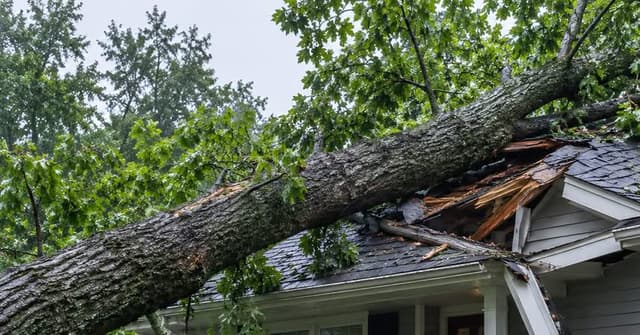
A tree on your roof is one of the most stressful situations a Grand Rapids, Michigan homeowner can face. One moment, a storm is passing through; the next, you hear a crack, a heavy impact, and realize a large limb or an entire tree has landed on your home. In those first minutes, what you do (and do not do) has a direct impact on your family’s safety, the extent of the damage, and how smoothly your insurance and restoration process will go. Knowing the correct sequence of actions ahead of time can turn a chaotic event into a manageable, step-by-step response.
Step 1: Protect People First. Evacuate and Secure the Area
The very first step when a tree lands on your roof is to assume the structure may be compromised. Even if damage looks minor from the outside, hidden fractures in rafters, walls, or support beams can make the building unsafe. If the impact is near bedrooms or living spaces that are occupied, calmly but quickly move everyone away from the affected area. If you hear ongoing creaking, shifting, or see cracks forming in ceilings or walls, leave the building entirely and wait at a safe distance.
- Do not walk directly under sagging tree sections, damaged roof areas, or leaning walls to “check” on the situation.
- Avoid entering attics or upper floors to investigate, as these are often the most compromised parts of the structure after an impact.
- If there is any sign of downed power lines, arcing, or burning smells, keep everyone back, do not touch metal surfaces or standing water, and move to a safe location away from the house. Once everyone is safe, you can begin making calls from a secure vantage point, such as a neighbor’s house or your vehicle.
Step 2: Call Emergency Services, Utilities, and Then Your Tree Service
After you have secured your family and pets, your next calls will depend on what kind of damage you see.
- If there are obvious structural collapse, fire risk, gas odor, or trapped occupants, call 911 immediately and describe the situation clearly.
- First responders can secure the scene, shut off utilities if needed, and determine whether it is safe for anyone to re-enter the home.
- If power lines are involved, whether they are visibly down, draped across the tree, or simply closer to the house than before, contact your electric utility right away and report a suspected line hazard.
- Do not attempt to move branches, cables, or anything touching the wires yourself. Once emergency responders and utility crews are notified or on the way, your next critical call is to an experienced emergency tree service.
Step 3: Let Professionals Remove the Tree and Stabilize the Scene
Once emergency and utility personnel have done their part, the next phase is safe removal and stabilization. This is where many homeowners are tempted to “just cut a few branches off” to reduce the weight on the roof. Doing so is extremely risky.
- Every cut changes the distribution of weight and can cause the tree to shift, potentially leading to sudden roof collapse, further structural damage, or serious injury to anyone nearby.
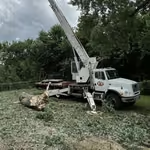
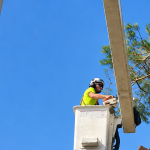
- Professional crews from Big Chipper Tree Service use cranes, bucket trucks, rigging systems, and controlled cutting techniques to safely remove tree material without causing further damage to the structure. Large sections are lifted off the roof from above rather than being dragged across shingles or weakened areas. Once the tree is removed, tarps or temporary coverings may be placed to reduce water intrusion until repairs can begin.
- Homeowners should stay clear of all active work zones and follow instructions from the crew leader at all times. If safe, take photos or short videos from a distance before and after removal to document the damage for insurance purposes. This visual record can be important when filing claims and working with contractors later.
- After immediate safety concerns are addressed, contact your insurance provider to report the incident with basic details and any available photos. Insurers may request documentation and invoices from both the tree service and repair contractors. A professional tree service firm in Grand Rapids can provide detailed reports on the removal process, equipment used, and any emergency measures taken.
Licensed restoration contractors should handle roofing, siding, or structural repairs after tree removal. Coordinating between the tree service, contractors, and insurance adjusters helps ensure a smoother, faster recovery process. For more information, call Big Chipper Tree Service at (616) 300-1811 to schedule your free estimate.
Frequently Asked Questions About Trees on Roofs in Grand Rapids, Michigan
Should I go into the attic to check for damage after a tree hits the roof in Grand Rapids, Michigan?
No. Attics and upper floors are often the most compromised parts of a structure after an impact. Avoid entering until emergency personnel or qualified contractors have assessed safety.
Can I start cutting branches off the tree before professionals arrive?
You should not. Cutting branches can shift the tree’s weight unexpectedly, potentially causing more roof collapse, wall failure, or personal injury. Wait for trained crews with proper equipment.
Will my insurance cover the cost of tree removal from the roof?
Many policies do cover reasonable costs to remove a tree that has fallen on a covered structure, though limits and conditions vary. Check your policy and speak directly with your insurer for specific coverage details.
What if the tree is still rooted but leaning heavily on my house in Grand Rapids, Michigan?
A rooted but severely leaning tree can be just as dangerous as one that has fully fallen. Treat it as an emergency and contact a professional tree service. They can assess root stability and plan a controlled removal.
How fast can Big Chipper respond in an emergency?
Response times depend on storm severity and call volume, but Big Chipper maintains 24/7 emergency crews specifically for urgent situations like trees on roofs and blocked driveways.
Summary Checklist: If a Tree Is on Your Roof in Grand Rapids
| Condition | Risk Level | Recommended Action |
| Structural Compromise or Instability | Critical | Evacuate everyone immediately and move to a safe location. |
| Collapse, Fire, or Gas Odor | Extreme | Call 911 immediately and stay away from the structure. |
| Tree Involved with Power Lines | Extreme | Stay clear of the area and contact the utility company immediately. |
| Debris on Roof or Structure | High | Contact Big Chipper Tree Service for safe, professional tree removal and rigging. |
| Post-Damage Assessment | Moderate | Photograph the damage from a safe distance for insurance documentation. |
Final Advice
A tree on your roof is not a situation to handle alone or improvise through. The combination of structural instability, potential utility hazards, and the sheer weight of wood involved makes this one of the highest-risk scenarios a homeowner can face. The safest and most efficient outcome comes from a simple, disciplined response: get people to safety, involve emergency and utility professionals when needed, and then let an experienced tree service handle the technical work of removal and stabilization.
In Grand Rapids and across West Michigan, storms and wind events are a reality of life. Planning ahead by identifying high-risk trees near your home, maintaining regular pruning, and knowing which emergency numbers to call helps reduce both the odds and the impact of a tree ending up on your roof. When the unexpected does happen, Big Chipper Tree Service can make the difference between a drawn-out, chaotic ordeal and a controlled, well-documented response. For 24/7 emergency tree service and expert help with trees on roofs, call Big Chipper Tree Service at (616) 300-1811 to get immediate assistance and schedule your free estimate.