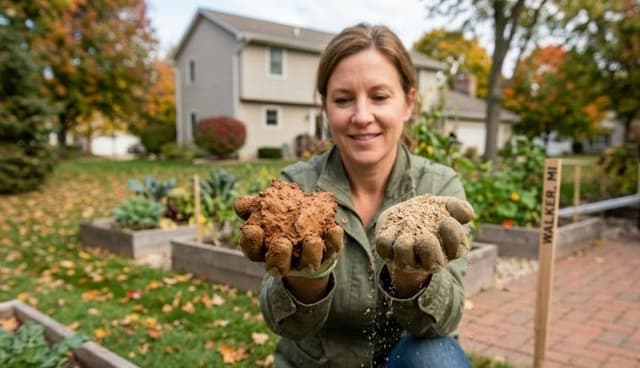
Walker and Wyoming, Michigan, have wildly different soils, sometimes within the same neighborhood. Clay holds water and chokes roots. Sand drains too fast and starves trees of nutrients.
Pick the right species for your soil, and the tree thrives with almost no help. Pick the wrong one, and it struggles for years before dying.
This guide gives you the exact species that work in each soil type, plus a simple test to figure out what you have in your own yard.
Key Takeaways
- Walker tends toward heavier clay loam; Wyoming has more variable soils with sandy patches near the Grand River.
- Clay-tolerant trees: swamp white oak, bur oak, river birch, black gum, hackberry.
- Sand-tolerant trees: eastern red cedar, black oak, eastern white pine, sassafras, jack pine.
- Use the 5-minute squeeze test before buying any tree.
- Most West Michigan yards are loam (a mix), which expands your options.
Quick Tree Selection Guide
If you want the short version, here it is:
- Clay soil → Swamp white oak, bur oak, river birch
- Sandy soil → Eastern red cedar, black oak, eastern white pine
- Compacted or unsure → Hackberry or red maple
- Small ornamental in clay → Serviceberry or hawthorn
- Small ornamental in sand → Redbud or sassafras
The rest of this guide explains why these picks work and what else fits each condition.
Expert insight: Most tree failures we see across Walker and Wyoming are not from poor care. They’re from poor species selection. The right tree in the right soil needs almost nothing from you for the next 50 years.
Why Soil Type Determines Tree Survival
Tree roots need three things from soil: water, oxygen, and nutrients. Clay and sand provide these in opposite ways.
- Clay has tiny particles that hold water and drain slowly. Trees not adapted to wet feet rot at the roots and die over several seasons.
- Sand has large particles that drain fast and lose nutrients quickly. Trees not adapted to dry conditions burn out in summer drought.
- Loam is a balanced mix that supports almost any species. Most West Michigan yards are loam to some degree.
What’s Under Your Yard
- Walker generally has heavier soils with significant clay, especially north of I-96.
- Wyoming has more variable soil. Properties closer to the Grand River often have sandier deposits. Areas south and east transition to clay loam.
- New construction sites in either city often have compacted, disturbed soils that act like clay regardless of the original profile.
For an exact reading on your lot, the USDA Web Soil Survey lets you enter your address and see the soil mapped underneath your property. It’s free.
How to Test Your Soil in 5 Minutes
You don’t need a lab. Try this:
- Dig a small hole 6 to 8 inches deep where you want to plant.
- Take a handful of soil and remove rocks or debris.
- Add water until it feels like moist putty.
- Squeeze it into a ball.
Reading the result:
- Falls apart immediately → sandy soil
- Holds a ball, crumbles when poked → loamy sand or sandy loam
- Forms a short ribbon between thumb and finger → loam
- Forms a long ribbon over 2 inches without breaking → clay or clay loam
Michigan State University Extension confirms this is the same hands-on test professional foresters use in the field.
Best Trees for Clay Soil
Swamp White Oak
Best for: wet clay. The single best clay tree for West Michigan. Strong wood, beautiful fall color, lives 100+ years. Grows 50 to 60 feet.
Bur Oak
Best for: heavy compacted clay. Handles drought, urban conditions, and tough sites. Slow growing but extremely tough.
River Birch
Best for: wet clay near drainage areas. Tolerates short-term flooding. Distinctive peeling bark adds year-round interest.
Black Gum (Tupelo)
Best for: clay yards wanting fall color. Brilliant scarlet and orange leaves. Slow-growing to 30 to 40 feet. Tolerates salt too.
Hackberry
Best for: compacted urban clay. Underrated workhorse. Handles drought, pollution, and salt. Birds love the small berries.
Red Maple
Best for: wet acidic clay. Outstanding fall color. Choose named cultivars like ‘October Glory’ or ‘Red Sunset’ for reliability.
Best Trees for Sandy Soil
Eastern Red Cedar
Best for: dry sandy spots. Roots deep, evergreen with bronze winter foliage, drought-resistant.
Black Oak
Best for: dry sandy shade. Specifically adapted to dry, sandy soils. Good fall color. Grows 50 to 60 feet.
Eastern White Pine
Best for: large sandy properties. Michigan’s state tree. Fast-growing with soft, long needles.
Sassafras
Best for: sandy soil with a wow factor. Three different leaf shapes on one tree. Incredible orange-purple fall color.
Jack Pine
Best for: the sandiest, driest spots. Native to northern Michigan’s sandy plains. Compact and tough, where nothing else grows.
Pin Oak
Best for: sandy acidic soil. Strong central leader, classic pyramid shape. Avoid if your soil is alkaline.
Trees to Avoid in Each Soil Type
Avoid in Heavy Clay
- Eastern white pine (rots in saturated soil)
- Paper or white birch (wants drainage)
- Sugar maple (struggles in wet clay)
- Most fruit trees (root rot is common)
- Dogwood (cannot tolerate wet feet)
Avoid in Pure Sand
- Sugar maple (burns out in drought)
- Sycamore (wants moisture)
- River birch (needs water)
- Most magnolias (need consistent moisture)
- Tulip tree (struggles in dry sand)
Soil Improvement: What Actually Works
You can’t change your soil type. You can improve how it behaves.
For Clay Soil
- Mix 2 to 3 inches of compost into the top 8 inches of the planting area.
- Plant slightly higher than grade so the root flare sits 1 to 2 inches above the surrounding soil.
- Mulch 2 to 3 inches deep, kept off the trunk.
For Sandy Soil
- Add 3 to 4 inches of compost worked into the planting area.
- Plant at grade.
- Mulch heavily (3 to 4 inches) to retain moisture.
- Plan for supplemental watering during the first 2 to 3 years.
Don’t add sand to clay or clay to sand. Both create concrete-like conditions that hurt root growth.
Soil Type Quick Reference Chart
| Soil Test Result | Drainage | Best Tree Choices | Avoid |
|---|---|---|---|
| Long ribbon, sticky texture | Slow drainage (clay) | Swamp white oak, bur oak, river birch, black gum, hackberry | White pine, paper birch, sugar maple |
| Short ribbon forms a loose ball | Moderate drainage (loam) | Most suitable zone 5 to 6 tree species | No major limitations |
| Crumbly, gritty texture | Fast drainage (sand) | Eastern red cedar, black oak, white pine, sassafras, jack pine | Sycamore, sugar maple, river birch |
For a deeper species list matched to specific Michigan conditions, see MSU Extension’s native trees and shrubs guide.
Planting Tips for Walker and Wyoming Yards
Best Time to Plant
- Spring: late April through May
- Fall: late September through mid-October
- Avoid: mid-summer heat and the April 15 to July 15 oak wilt window for any oak
Watering the First Year
New trees need 10 to 15 gallons of water per week during the first growing season. Sandy soils need it most consistently. A skipped week in summer can kill a young tree.
Mulch Properly
A 3-foot diameter mulch ring, 2 to 3 inches deep, kept away from the trunk. This is the single highest-ROI step a homeowner can take.
Expert insight: A correctly mulched, well-watered tree in matched soil will outperform an expensive specimen tree planted in the wrong conditions every single time. Soil match beats price tag.
Common Mistakes Walker and Wyoming Homeowners Make
- Planting white pine in clay (dies within 5 years)
- Planting sugar maple in sand (burns out the first dry summer)
- Skipping the soil test
- Buying based on price at a big-box store
- Planting too deeply so the root flare is buried
- Forgetting about mature size (a 60-foot oak does not belong 10 feet from the foundation)
Frequently Asked Questions
How do I know if my Walker or Wyoming yard is clay or sand?
Use the squeeze test above or check the USDA Web Soil Survey by entering your address. Most Walker yards lean clay; Wyoming varies by neighborhood.
What is the best tree for clay soil in West Michigan?
Swamp white oak. It tolerates wet clay better than nearly any other shade tree, lives a century or more, and provides excellent fall color and wildlife value.
What is the best tree for sandy soil in West Michigan?
Eastern red cedar for evergreen color and toughness, or black oak for a deciduous shade tree. Both handle sand and drought without complaint.
Is my soil clay or just compacted?
Compacted soil acts like clay even if the underlying material is sand or loam. New construction sites are notoriously compacted. Aerating, adding compost, and choosing tougher species like bur oak or hackberry help.
Should I get a professional soil test?
For about $25, an MSU Extension Soil Test Kit gives you precise pH, nutrient levels, and texture readings. Worth it for a major planting project or if multiple trees have failed in the same spot.
When is the best time to plant a tree in Walker or Wyoming?
Late April to mid-May, or late September to mid-October. Avoid summer planting and avoid planting oaks during the April 15 to July 15 oak wilt window.
How long until a new tree shows it likes its location?
Year one, the tree builds roots. In year two, it grows modestly. Year three and beyond, growth accelerates if the species matches the site.
Why do so many West Michigan trees develop yellow leaves?
Often, a soil pH issue. Pin oaks and rhododendrons in alkaline clay develop iron chlorosis (yellow leaves with green veins). A soil test confirms pH, and species selection or amendment fixes it.
Can I plant near power lines?
Only with small trees under 25 feet at maturity, like serviceberry, redbud, or crabapple. Anything larger creates utility conflicts and safety hazards.
What happens if I plant the wrong tree for my soil?
The tree usually survives 3 to 8 years before declining. By the time symptoms are obvious, the root system is too damaged to recover. Removal and replanting then costs more than starting with the right species would have.
Choose the Right Tree for Your Soil in Walker and Wyoming
The clay vs. sand problem in Walker and Wyoming has a simple fix. Test your soil first, then choose a tree that matches it. A swamp white oak in clay can thrive for a century. A black oak in sand can do the same.
Choosing the wrong tree often leads to years of poor growth and eventual removal. Getting it right from the start saves time, money, and effort.
Need help selecting the right tree for your property? Contact Big Chipper Tree Service LLC for a free on-site consultation. Get clear recommendations based on your soil so you can plant once and grow it for generations.
.