
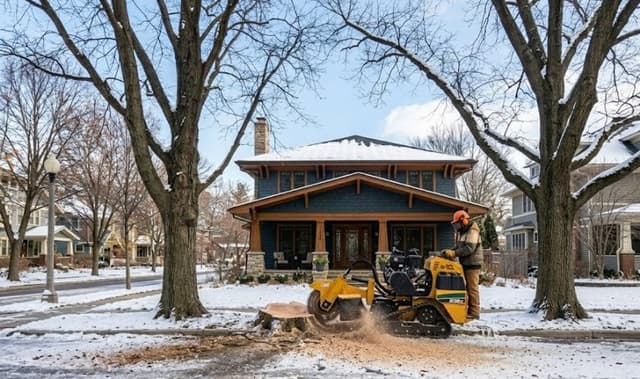
Winter stump grinding in Grand Rapids works better than most homeowners expect. The frozen ground supports heavy equipment without leaving ruts, dormant turf bounces back faster in spring, pests are inactive, and scheduling is easier because winter is the off-season for tree work.
The myth that frozen ground makes stump grinding impossible is exactly that, a myth. Modern grinders cut through frozen soil and root wood with no issue. What changes is the impact on your yard, and that change is overwhelmingly positive.
This guide explains why winter is one of the best times to grind a stump in West Michigan, what to expect, and how to get it done before spring.
Key Takeaways
- Frozen ground prevents the lawn ruts and turf damage common in spring or summer grinding.
- Trees and surrounding plants are dormant, reducing the risk of root or shock damage to nearby vegetation.
- Pests, fungi, and disease vectors are inactive in winter, lowering the risk of stump-borne infestation.
- Winter is the off-season; scheduling is easier, and pricing is often more flexible.
- Grinding before April 15 avoids Michigan’s oak wilt restriction window.
Why Winter Stump Grinding Works in Grand Rapids
Grand Rapids sits in a humid continental climate with an average winter temperature around 28°F and roughly 70 to 80 inches of snowfall per season. Frost depth in West Michigan typically reaches 30 to 42 inches by mid-winter, well below the depth most stump grinding requires.
That solid ground is the secret. A 1,500-pound stump grinder rolling across soft spring soil cuts ruts that take a full growing season to repair. The same machine on frozen ground leaves your lawn essentially untouched.
For Grand Rapids climate data, the National Weather Service Grand Rapids office tracks frost depth, snowfall, and seasonal temperatures throughout the winter.
The Six Real Advantages of Winter Stump Grinding
1. No Lawn Damage From Heavy Equipment
This is the biggest reason knowledgeable Grand Rapids homeowners book winter. Spring and summer grinding almost always leaves visible tracks across the yard. Winter grinding does not. Even where snow has melted, the underlying soil is firm enough to support equipment without sinking.
2. Surrounding Plants Are Dormant
Tree roots, perennials, and shrubs near the stump are inactive in winter. Vibration from a grinder, soil disturbance, and the noise simply do not affect them. Try the same job in May during active root growth, and nearby plants can suffer from disturbance.
3. Pests and Fungi Are Inactive
A fresh stump in warm weather attracts termites, carpenter ants, sap-feeding beetles, and fungal spores within days. In winter, all of those threats are dormant. By the time spring arrives, the stump is gone, and the area is clean.
This matters for oak stumps, especially. In Michigan, oak wilt is spread by nitidulid beetles that visit fresh wounds. Per Michigan’s Department of Natural Resources oak wilt guidance, winter is the ideal time to handle any oak work because the beetles are not flying.
4. Cleaner Worksite Cleanup
Winter sites stay tidy. No mud caked into chip piles. No tracked-in dirt across walkways. No grass churned into slurry. The chips fall on frozen ground and are easy to bag, spread, or haul away.
5. Better Scheduling and Availability
Tree services are slammed from April through October. Winter is the off-season for most West Michigan crews. That means faster scheduling, more flexibility on the date, and crews that are not stretched thin between jobs.
6. Spring-Ready Yard
A stump ground in January means the soil has months to settle, the chips begin to break down, and your yard is ready for grass seed, sod, planting, or hardscape installation the moment spring arrives. No waiting in line behind hundreds of other homeowners after the thaw.
What About the Frozen Stump Itself?
Some homeowners worry that frozen wood is too hard to grind. In practice, this is not an issue.
Modern stump grinders use carbide-tipped teeth designed to cut through dense hardwood, root flare, and soil mixed with rocks. A frozen oak stump grinds at essentially the same rate as an unfrozen one. The teeth do wear slightly faster on frozen wood, but professional crews account for this in their planning.
What does change is the depth of grinding. In deep frost, grinding 8 to 12 inches below grade takes more passes than the same depth in summer. A reputable Grand Rapids crew adjusts technique accordingly without passing the cost on to you.
Snow Considerations
Snow on the ground is not a problem for stump grinding. The crew clears snow from the immediate work area before starting, and the grinder runs on the exposed frozen soil underneath. Light snow in the air does not stop work either.
What stops work:
- Active heavy snowfall is reducing visibility
- Ice storms are creating slip hazards
- Sub-zero temperatures that stress equipment
- Deep snowpack (over 18 inches) that makes equipment access impossible
For most Grand Rapids winters, suitable grinding days happen throughout December, January, and February.
When Winter Stump Grinding Makes the Most Sense
Winter is especially smart for these scenarios:
- You had a tree removed in the fall and want the stump gone before spring landscaping.
- The stump is on a manicured lawn; you do not want it torn up.
- You’re planning a spring patio, garden, or fence in that location.
- You have multiple stumps and want the whole property cleaned up at once.
- The stump is from an oak, and you want to avoid the April 15 to July 15 oak wilt window.
- You’re selling in spring and need the yard to be show-ready.
Cost Comparison: Winter vs. Summer Stump Grinding
| Factor | Winter | Summer |
|---|---|---|
| Base grinding cost | Comparable | Comparable |
| Lawn repair after service | Minimal or none | Potential additional repair costs |
| Wait time for appointment | Typically shorter | Often longer due to peak demand |
| Risk of pest infestation | Generally lower | Higher during active pest seasons |
| Cleanup time on site | Often faster in stable conditions | May take longer depending on soil and debris conditions |
| Landscape readiness for next season | Better positioned for spring projects | May delay follow-up landscaping plans |
Most Grand Rapids stumps cost $100 to $400 to grind, depending on diameter. Larger stumps over 30 inches across can run $400 to $800 or more. Multi-stump packages typically come at a discount.
The hidden savings in winter are in lawn repair and scheduling flexibility, not the base price.
The Oak Wilt Reason to Grind Now
If your stump is an oak, this is not optional advice.
Michigan law and DNR best practices restrict oak pruning and removal between April 15 and July 15 due to oak wilt risk. Stumps left from oaks cut during winter need to be ground or treated before April 15; the fresh stump can act as an entry point or attractant during the high-risk season.
The simplest solution: grind oak stumps in winter, before the high-risk window opens. Per Michigan’s “Don’t Move Firewood” program, it is also important to keep oak wood and chips local rather than transporting them, since invasive pests and diseases ride along with moved wood.
What to Expect on Stump Grinding Day in Winter
A typical winter stump grinding visit in Grand Rapids:
- Arrival and walk-through. The crew confirms the stump location, surrounding obstacles, and any underground utilities (MISS DIG 811 should be called 3 business days in advance).
- Snow clearing. Snow within the work area is shoveled aside or compacted.
- Grinding. The stump is ground to 4 to 12 inches below grade, depending on what you want done with the area afterward.
- Chip handling. Chips are either left as backfill, raked into a pile for you, or hauled away, depending on the agreement.
- Cleanup. Sawdust on the snow is mostly raked. Anything that melts into the lawn in spring breaks down naturally.
Total time for a single residential stump usually runs 30 to 90 minutes.
Common Concerns Homeowners Raise About Winter Grinding
“Won’t the chips look ugly all winter?” The chips can be raked away or hauled at the time of grinding. If left in place, they blend with snow cover and disappear visually until spring.
“What if there are buried utilities?” Always call MISS DIG 811 at least 3 business days in advance. This is free and required by Michigan law for any digging or grinding work.
“Can I plant grass right after winter grinding?” Wait until spring. The chips need time to settle, and turf seed needs warmer soil to germinate. By April or May, the area is ready.
“What about my sprinkler system?” Mark sprinkler heads before the crew arrives. Frozen ground actually protects most underground systems, but caution is still smart.
Frequently Asked Questions
Can stump grinding be done when the ground is frozen?
Yes. Modern stump grinders are designed to cut through both frozen wood and compacted soil without issue. Frozen ground stabilizes equipment and significantly reduces lawn damage during the process. Most professional crews in Grand Rapids continue operating normally throughout winter.
Is winter stump grinding more expensive in Grand Rapids?
No. Base pricing is generally consistent throughout the year. Winter often reduces total project cost by eliminating post-job lawn repair. It also allows for faster scheduling, which can help avoid peak-season pricing pressure.
Will snow stop stump grinding work?
Light snow does not prevent stump grinding. Crews clear the immediate work area and operate on the frozen ground underneath. However, heavy snowfall, ice storms, or extreme cold conditions may require rescheduling for safety reasons.
How deep should a stump be ground?
Standard stump grinding typically reaches 4 to 6 inches below ground level. This depth is enough for grass growth and basic landscaping needs. If you plan to plant a tree or install a structure, request deeper grinding of 10 to 12 inches.
How long before I can plant grass after stump grinding?
You should wait until soil temperatures consistently exceed 50°F. In Grand Rapids, this usually happens in late April or May. Adding fresh topsoil over the grindings improves seed contact and helps the grass establish properly.
What happens to the roots after grinding?
Most lateral roots remain underground after grinding. Over time, they naturally decompose and integrate into the soil. This process does not interfere with grass growth or shallow planting projects.
Can oak stumps be ground in winter?
Yes. Winter is the safest time to grind oak stumps because oak wilt-spreading beetles are inactive. Completing the work before April 15 helps avoid the high-risk transmission period. This timing aligns with Michigan DNR recommendations.
Do I need a permit for stump grinding in Grand Rapids?
In most cases, no permit is required for private property work. However, stumps located near sidewalks, streets, or public right-of-way areas may require city approval. It is always best to confirm with local authorities before starting.
Is DIY stump grinding worth it in winter?
DIY stump grinding is possible, but not ideal in winter conditions. Frozen ground and low temperatures make the work slower and more physically demanding. Most homeowners find it safer and more cost-effective to hire a professional crew.
Will wood chips attract pests later?
Wood chips generally do not attract significant pest activity when handled properly. They break down naturally and can even improve soil quality over time. If you prefer a cleaner finish, you can request full removal during the service.
Can stumps near foundations be ground safely in winter?
Yes. Frozen ground provides better stability for equipment, allowing more controlled and precise grinding. This makes it easier to work near foundations, patios, and walkways. Professional crews take extra care in these sensitive areas.
When should I grind a stump after tree removal?
It is best to grind a stump as soon as possible after removal. Early grinding prevents soil settling issues and simplifies cleanup. It also ensures your yard is ready for landscaping or planting in the same season.
Why Winter Is the Best Time for Stump Grinding in Grand Rapids
Winter stump grinding in Grand Rapids is one of the smartest scheduling decisions a homeowner can make. The frozen ground protects your lawn, dormant plants ignore the disturbance, pests stay inactive, and your yard is ready for spring before your neighbors even start planning their projects.
Have a stump that needs to go? Call Big Chipper Tree Service LLC today to schedule your winter stump grinding before the spring rush hits. Get a free on-site quote, lock in flexible winter scheduling, and start spring with a clean, level yard.