A stump left behind after a tree comes down looks like the job is finished. In a lot of cases, it’s actually where a new problem starts.
This article covers what’s really happening inside an old stump, why it can put nearby healthy trees at risk in ways most homeowners never expect, and when grinding it out is worth the extra step.
Key Takeaways
- Old tree stumps can attract carpenter ants, wood-boring insects, fungi, and rodents as they decay.
- Diseased oak stumps may continue spreading oak wilt through connected root systems.
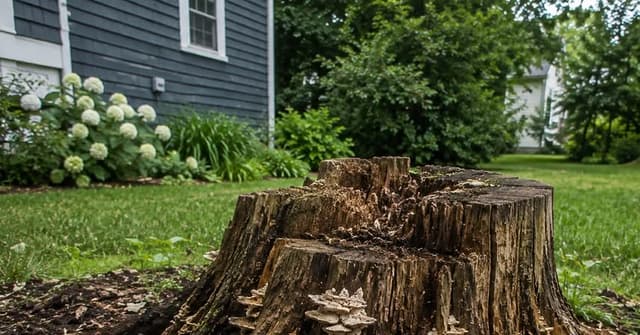
- Soft wood, fungal growth, sawdust, and insect activity are warning signs that a stump needs attention.
- Stump grinding helps reduce long-term pest, disease, and safety risks for nearby trees and structures.
- A professional assessment can determine whether stump grinding should be prioritized.
What Problems Do Old Tree Stumps Actually Cause?
Old tree stumps create ongoing pest and disease risk because decaying wood attracts wood-destroying insects and fungi, and in some cases the stump’s living root system can still spread disease to nearby trees for years after the trunk is gone. The stump isn’t inert once the tree is cut. It’s a slowly rotting food source sitting a few feet from your house.
The Carpenter Ant Misconception Almost Everyone Has
Most people assume carpenter ants eat wood the way termites do, and that a stump full of ants is a stump actively being consumed. That’s not quite right, and the real explanation matters for how the risk actually spreads.
Michigan State University Extension confirms that carpenter ants don’t eat wood at all. They tunnel through it to build galleries, targeting wood that’s already damp or decaying, which is exactly what an old stump becomes within a season or two. The bigger issue is structural: colonies commonly establish a “parent nest” outdoors in a stump, then send workers out to build one or more “satellite nests” indoors, often in a damp wall void or attic, long before anyone notices ants in the house.
Think of It Like a Company With a Remote Office
A carpenter ant colony working out of your old stump isn’t a self-contained problem in the yard. The stump functions like a headquarters, and the colony opens smaller branch offices wherever it finds another patch of soft, moist wood, which very often means your siding, deck framing, or a damp corner of the basement.
That’s why pest control companies treat an indoor carpenter ant sighting as a symptom rather than the whole problem. Eliminating the ants inside without addressing the parent colony outside usually just means the satellite nest rebuilds.
Why Oak Stumps Are a Special Case in West Michigan
Here’s a mechanism most people never hear about: cutting down a diseased oak with a professional removal doesn’t necessarily stop the disease. If the tree died from oak wilt, the fungus can keep moving through the root system even after the trunk is gone.
The Morton Arboretum explains that oak wilt spreads primarily through root grafts, natural connections that form between the root systems of oaks growing within about 50 feet of each other. Those roots can share a vascular system, meaning the fungus travels from one tree’s roots into a neighbor’s roots without ever touching the surface. A stump from an oak wilt casualty can continue feeding disease into a healthy oak next door for one to six years unless the root connection is mechanically or chemically severed, something MichiganOakWilt.org documents as a routine, expensive complication of oak wilt cases across the state.
What We See in Grand Rapids Yards
Grand Rapids lost a large share of its ash canopy to emerald ash borer over the past fifteen years, which left plenty of ash stumps scattered through older neighborhoods, alongside the usual mix of oak, maple, and silver maple stumps from routine removals. In yards with several stumps sitting for multiple seasons, it’s common to find soft, punky wood, visible fungal growth at the base, and ant or beetle activity that’s clearly been established for a while, not something that just showed up.
Pest and Disease Risks by Type
| Problem | What’s Happening | Why It Spreads |
| Carpenter ants | Parent colony nests in decaying stump wood | Satellite colonies migrate into nearby structures |
| Wood-boring beetles | Larvae develop inside rotting stump wood | Adults emerge and attack nearby stressed trees |
| Root rot fungi (e.g., Armillaria) | Fungus colonizes stump and root system | Spreads underground to roots of nearby plants |
| Oak wilt (oak stumps only) | Fungus persists in living root system after cutting | Transmits through root grafts to nearby oaks |
| Rodents | Hollowed stump interior provides shelter | Nesting sites can expand toward structures |
Stump Age and Risk: A Quick Reference
| Stump Condition | Risk Level |
| Freshly cut, hard wood, no visible decay | Low, monitor |
| Softening wood, minor fungal growth | Moderate, address within a season |
| Hollow, extensive fungus, ant or beetle activity | High, prioritize removal |
| Oak stump from a confirmed oak wilt tree | High, regardless of age, due to root graft risk |
Signs Your Stump Has Already Become a Problem
If nearby trees of the same species start showing stress, a round of preventive pruning alone won’t address a root-level disease issue, so it’s worth ruling that out first. Watch for these signs on the stump itself:
- Fine sawdust piles near the base (a sign of carpenter ant or beetle activity)
- Mushrooms or shelf fungus growing on or around the stump
- Soft, spongy wood that gives when pressed
- Visible tunnels or exit holes in the bark or exposed wood
- Nearby trees of the same species showing unexplained decline
The 60-Second Stump Check
Before deciding whether a stump needs attention now, a quick look answers most of it:
- Does the wood feel soft or crumble when you press it?
- Is there fungus, mushrooms, or sawdust at the base?
- Was the original tree an oak, and did it die from disease rather than routine removal?
- Are there other trees of the same species within about 50 feet?
Any “yes” here is a reason to move the stump up your priority list rather than letting it sit through another season.
Frequently Asked Questions
How long does it take for a stump to become a pest problem?
It varies by species and moisture, but softwood species and stumps in consistently damp soil can develop conditions attractive to pests within one to two growing seasons. A stump that’s been in the ground for several years without issue can still develop problems once the wood decays enough.
Does grinding a stump remove the root system too?
Stump grinding removes the visible stump and the wood mass at and below grade, but it doesn’t extract the full root system. Roots decompose naturally over time, though for oak wilt cases, grinding alone doesn’t sever root graft connections, which requires separate trenching.
Can carpenter ants in a stump really get into my house?
Yes. MSU Extension notes that carpenter ant colonies commonly maintain a parent nest outdoors, often in a stump or hollow tree, with satellite colonies established indoors. If you see carpenter ants inside your home during winter, when it’s too cold for them to be active outdoors, that’s a strong sign an indoor colony already exists.
Is stump grinding necessary if the tree looked healthy when it was removed?
Not always, but a healthy-looking tree at removal doesn’t guarantee a low-risk stump. Decay conditions develop over time regardless of the tree’s health before removal, so it’s worth reassessing any stump that’s been sitting for more than a year, especially near a house or other high-value trees.
What’s the difference between stump grinding and full stump removal?
Grinding mechanically breaks the stump down into wood chips at and below the surface, which is faster, less disruptive to surrounding roots and hardscape, and the standard approach for most residential situations. Full removal pulls the entire root ball, which is more invasive and typically reserved for construction or replanting projects.
Should I be worried about a stump from a tree that died of a disease?
Yes, more than a routine removal stump. Disease-related removals, especially oak wilt, carry a higher chance of ongoing root-level transmission to nearby trees of the same species, which is worth flagging to a professional at the time of removal rather than after a neighboring tree starts declining.
The Bottom Line: Why Old Tree Stumps Are More Than an Eyesore
A stump sitting in the yard isn’t neutral. It’s either quietly decomposing without incident, or it’s actively feeding pests, fungi, and in the case of diseased oaks, an infection that’s still moving through the roots next door.
The trees that end up affected by a neighboring stump problem rarely show symptoms until the issue is already established. If you have an old stump that’s been sitting for more than a season, especially one from a diseased or storm-damaged tree, the team at Big Chipper Tree Service can take a look and tell you honestly whether grinding it is worth prioritizing.