Key Takeaways:
- Emerald Ash Borer (EAB) kills ash trees quickly in West Michigan and turns structurally sound wood into brittle, hazardous material that is far more dangerous to climb and rig.
- Removing ash trees before advanced EAB damage develops keeps crews safer, reduces the likelihood of storm failure, and often lowers removal costs for homeowners.
- Delaying ash removal until the tree is mostly dead or heavily decayed often requires cranes, complex tree protocols, and emergency work after branches or trunks fail.
- Early evaluation and proactive removal give West Michigan property owners more options for timing, equipment, and replacement planning.
- Big Chipper Tree Service offers free ash evaluations, hazardous removals, 24/7 emergency response, and full cleanup for ash trees impacted by EAB across West Michigan.
The Emerald Ash Borer (EAB) has damaged thousands of ash trees across Grand Rapids, Holland, Wyoming, Ada, and other West Michigan communities. This invasive insect attacks untreated ash trees and can kill them within a few years. As EAB spreads through a tree, it weakens the wood and makes it brittle. Brittle wood can break without warning, making tree removal more dangerous and more expensive. Removing an ash tree before EAB causes severe damage helps protect your property, reduces removal costs, and keeps everyone near the tree safer.
The Emerald Ash Borer and Ash Decline in West Michigan
The Emerald Ash Borer is a small, metallic-green beetle whose larvae feed beneath the bark of ash trees, tunneling through the sapwood in winding galleries. Over time, these galleries disrupt the tree’s ability to move water and nutrients between the roots and the canopy, causing crown thinning, branch dieback, and eventual death. In West Michigan, this process has played out repeatedly along streets, in older neighborhoods, and in natural woodlots, to the point where many ash trees are already dead or in steep decline.
At first, EAB damage may look subtle: a few dead twigs near the top of the crown, some thinning foliage, or increased woodpecker activity on the trunk. As the infestation progresses, larger branches die, the upper canopy becomes sparse, and characteristic D-shaped exit holes can be found on the bark where adult beetles have emerged. Beneath those bark splits and exit holes, the wood is changing. It is drying, cracking, and losing its ability to hold together under the forces applied during climbing and rigging. That shift in wood properties is exactly why timing of removal matters so much.
Why EAB-Damaged Ash Wood Becomes Dangerous to Work
Predictability of Healthy Ash Wood
Healthy ash wood is generally stable and predictable, even when removal is required for construction or landscaping. Climbers can select secure tie-in points, limbs can be safely rigged and lowered, and trunks can be sectioned in a controlled manner without unexpected failure.
Structural Breakdown from EAB Infestation
Once emerald ash borer (EAB) has been active for several years, the tree’s internal water transport is disrupted and energy reserves are depleted. This leads to widespread crown dieback and progressive internal decay.
Loss of Strength and Flexibility
As the wood dries out, it loses elasticity and becomes increasingly brittle. Branches that would normally bend under pressure may snap suddenly instead of flexing, increasing the risk of unpredictable breakage during work.
Hidden Internal Decay
Cavities often develop inside the trunk or major limbs, leaving only a thin outer shell of sound wood. This creates a misleading appearance of strength while significantly reducing actual load-bearing capacity.
Increased Risk of Sudden Failure
Dead tops may break off in even light winds, and long vertical cracks can form along the trunk or near the base, further weakening structural integrity.
Elevated Hazards During Removal
For professional crews, these conditions reduce the number of safe anchor points and often require heavier reliance on mechanical equipment. Without careful planning and execution, the risk during removal work increases significantly.
Why Timing Your Ash Tree Removal Before Advanced EAB Damage Matters
In West Michigan, ash trees affected by emerald ash borer (EAB) can decline rapidly once infestation progresses. What begins as a manageable pruning or removal job can quickly turn into a complex and hazardous operation. Timing plays a critical role in both safety and cost. Here are some of the reasons to remove your ash tree before EAB makes the wood dangerous work –
Safer Working Conditions
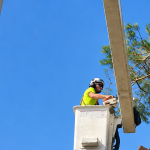
From a safety standpoint, the best time to remove an ash tree in West Michigan is before it becomes heavily infested and structurally compromised. When the tree still retains a healthy live crown and solid wood, arborists can climb it more safely or use a bucket truck for efficient access.
More Controlled Removal Process
In earlier stages of decline, branches can be removed in larger, manageable sections. The trunk can also be cut and sectioned in a controlled manner without the heightened risk of sudden splitting or structural failure during each cut.
Reduced Equipment Requirements
From a cost and logistics perspective, earlier removal is typically more efficient. Trees that are still structurally sound often require less specialized equipment, fewer crew members, and less time on site to complete safely.
Increased Complexity in Advanced Decline
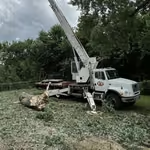
Once emerald ash borer (EAB) has killed most of the tree and decay has progressed, climbing may no longer be safe. Removal may then require cranes or additional aerial equipment, along with more complex rigging systems to manage unstable wood.
Higher Costs with Delayed Action
As conditions worsen, labor intensity and equipment needs increase, which raises overall project costs. Property owners who act before severe EAB damage develops often benefit from safer, simpler, and more cost-effective removal.
What Happens When You Wait Too Long to Remove an EAB-Killed Ash Tree
Waiting until an ash tree is fully dead or visibly rotting is one of the most common and costly mistakes homeowners make when dealing with emerald ash borer (EAB). Once the tree dies, structural decline accelerates, turning what could have been a routine removal into a hazardous situation. Understanding the risks of delay helps highlight why early action is so important.
Rapid Loss of Structural Stability
A dead ash tree may stand for a short period, but its strength decreases quickly over time. As decay progresses, the trunk and branches become increasingly unstable and prone to failure.
Falling Limbs and Property Damage
Large dead limbs can break off during normal wind events, posing a serious risk to roofs, fences, sheds, vehicles, and nearby structures. Even a single limb failure near high-traffic areas like driveways or play spaces can create a major safety hazard.
Increased Risk of Tree Failure
In more advanced cases, an EAB-killed ash may begin to lean or develop visible cracks at the base, signaling that the root system can no longer safely support the tree. This increases the likelihood of partial or total collapse, sometimes even in calm weather conditions.
Emergency Removal Conditions
At this stage, removal is no longer routine maintenance but an emergency response. Emergency work may require rapid scheduling, coordination with utility companies if power lines are involved, and highly controlled dismantling of unstable sections.
Higher Costs and Greater Complexity
Because of the elevated risk and urgency, emergency removals are significantly more expensive than planned, preventative removals. Acting earlier helps avoid dangerous conditions, reduces complexity, and lowers overall costs.
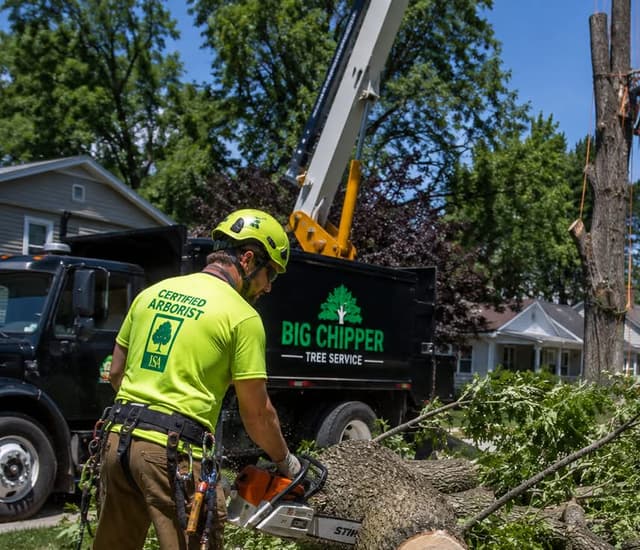
Big Chipper Tree Service can assist you in safely removing your ash trees at all stages of EAB damage, from early decline to high-risk trees needing cranes and advanced rigging. Every job starts with a certified arborist inspection and a clear written estimate covering scope, timing, and cost.
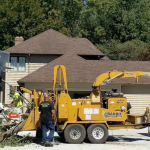
Our team uses professional equipment like bucket trucks, lifts, cranes, and grapple trucks to ensure safe removal and protect surrounding property. Debris is chipped, hauled away, or reused as mulch, and stump grinding is available for a clean finish and future planting. Emergency 24/7 response is available for failed or hazardous trees. Safety, communication, and full cleanup are prioritized on every project. Call Big Chipper Tree Service now at (616) 300-1811 to Book Your Free Estimate !!
Frequently Asked Questions About Ash Tree Removal and EAB in West Michigan
Are all ash trees in West Michigan doomed once EAB arrives?
Untreated ash trees in areas with established EAB populations face a very high risk of decline and death over time. Some individual trees may decline more slowly, but counting on luck is not a safe strategy, especially near homes and high-traffic areas.
Is it safe for someone to climb a dead ash tree to remove it?
In many cases, no. Severely EAB-damaged ash wood can be too brittle to support the weight of a climber and rigging. Professional companies often refuse to climb dead or heavily compromised ash trees and instead use bucket trucks or cranes to work from outside the tree.
Can I simply let my ash tree stand until it falls on its own?
Allowing a dead or dying ash to fall on its own is a serious safety hazard. Even if it is located away from your home, it can still threaten neighbors, outbuildings, vehicles, or utility lines. Proactive removal is far safer and more responsible.
Is it okay to use EAB-killed ash for firewood?
Yes, ash killed by EAB can be used for firewood, but you should avoid transporting it long distances. Keeping firewood local and following any state or local guidelines about moving ash wood helps reduce the spread of pests to new areas.
How do I get an estimate from Big Chipper Tree Service for ash removal?
You can call Big Chipper Tree Service at (616) 300-1811 or submit a request through their online estimate form. A certified arborist will visit your property, evaluate your ash trees, discuss your goals, and provide a free, no-obligation written estimate.
Summary Checklist: When to Remove an Ash Tree in West Michigan
| Condition | Risk Level | Recommended Action |
| Visible EAB Symptoms (Exit holes, bark splits, thinning crown) | High | Consult a certified arborist for a professional assessment. |
| Proximity to Targets (Homes, driveways, or power lines) | Critical | Prioritize professional tree removal to prevent property damage or injury. |
| Increased Woodpecker Activity (Bark stripping) | Moderate to High | Schedule a tree inspection immediately. |
| Structural Defects (Major deadwood, cracks, or leaning) | High | Do not delay. Schedule tree removal as soon as possible for safety. |
| Proactive Management (Pre-infestation or early decline) | Low to Moderate | Plan tree removal before storm season to reduce emergency risks and costs. |
Final Advice
Emerald Ash Borer has permanently changed how West Michigan property owners must think about ash trees. These trees can no longer be treated as low-maintenance background shade; they are now living assets that either require ongoing protection or planned removal. Waiting for an ash tree to “finish dying” before acting often results in more dangerous working conditions, higher removal costs, and a greater risk of property damage or injury. Early evaluation, honest risk assessment, and proactive decision-making are your best tools for staying ahead of EAB.
Walk your property, identify your ash trees, and pay attention to subtle changes in foliage and bark. When you see signs of trouble or if you simply know EAB is active in your area, call a professional tree service firm in Grand Rapids, Michigan, that understands both the biology of the pest and the practical realities of hazardous tree removal.
Big Chipper Tree Service has been serving Grand Rapids and West Michigan since 1986, with a certified arborist-led team, a workmanship guarantee, and the equipment necessary to handle even the largest and most dangerous ash removals. For expert assessment, clear recommendations, and safe, efficient ash tree removal before EAB makes the wood truly dangerous to work, call Big Chipper Tree Service at (616) 300-1811 to schedule your free estimate now.