Key Takeaways
- Holland’s location on Lake Michigan creates intense lake-effect snow, ice loading, and wind events that stress trees year-round.
- Freeze-thaw cycles cause frost cracks in bark and soil heaving that damages root systems, especially in young trees.
- Spring and summer thunderstorms bring high winds that exploit pre-existing structural weaknesses in trees.
- Heavy, wet snow loads from lake-effect storms can snap branches or split trees with poor structure.
- Regular inspection and proper pruning reduce weather-related tree damage and improve storm resilience.
Holland, Michigan sits directly on the eastern shore of Lake Michigan, exposing it to some of the most challenging weather conditions for trees in the Midwest. The lake’s influence creates weather patterns that differ significantly from inland Michigan: heavier snowfall, more frequent ice accumulation, stronger and more consistent winds, and greater temperature variability. These conditions put trees under constant stress, making Holland homeowners’ tree care needs distinct from other parts of the state.
Understanding how Holland’s specific weather patterns affect trees helps homeowners make better decisions about species selection, pruning, and risk management. Trees that thrive inland may struggle with Holland’s lake-effect conditions. This article explains Holland’s unique weather challenges and what homeowners can do to protect their trees.
Lake-Effect Snow and Ice Loading
Holland receives an average of 80-100 inches of snow annually, much of it from lake-effect storms. When cold Arctic air moves across the relatively warm waters of Lake Michigan, it picks up moisture that dumps as intense, localized snow bands. These storms can drop 12-24 inches of heavy, water-laden snow in 24-48 hours.
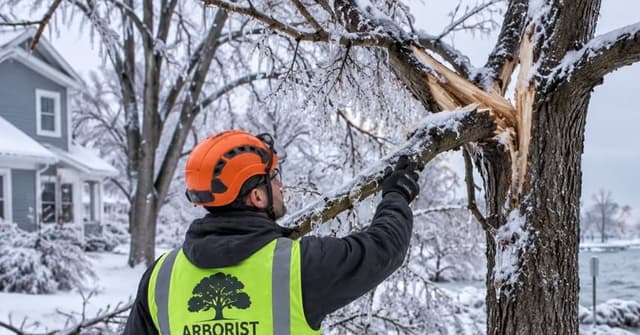
- The weight of accumulated snow on branches is the primary concern. A quarter-inch of ice or 6-8 inches of wet snow on a 20-foot branch can add 100+ pounds of weight.
- Trees with codominant stems, narrow branch angles, or pre-existing cracks are particularly vulnerable. Evergreens are especially at risk because they retain needles year-round.
- Ice loading presents an even greater threat than snow. When freezing rain coats branches, even small-diameter limbs can accumulate enough ice to snap. Trees that might handle snow loads well can fail catastrophically under ice loading.
High Wind Events
Wind off Lake Michigan puts consistent stress on Holland trees throughout the year. The unobstructed fetch across the water means winds maintain strength rather than dissipating over land. Holland experiences frequent wind events: spring and summer thunderstorms bring straight-line winds exceeding 60 mph, while fall and winter storms can produce sustained winds of 40-50 mph with gusts over 70 mph.
- Shallow-rooted species are disproportionately affected. Silver maple, tulip poplar, birch, and ornamental cherries prioritize lateral root spread over deep anchorage, making them prone to uprooting when soils are saturated. Trees with prior damage, decay, or poor structure from improper pruning fail at lower wind speeds than healthy specimens.
- Wind damage often exploits pre-existing weaknesses rather than creating new ones. A tree with included bark at a branch union or internal decay will fail at that point during high winds. This is why regular inspection and corrective pruning matter.
Freeze-Thaw Cycles
Michigan winters bring repeated freezing and thawing rather than one long, steady freeze. This cycle causes frost cracks in bark and can heave and loosen soil around root systems, particularly for younger or recently planted trees.
Frost cracks occur when bark and outer wood contract rapidly during extreme cold, then expand during mid-winter thaws. The different expansion rates create stress that exceeds tissue strength, producing vertical cracks that can extend several feet up the trunk. While frost cracks don’t always kill trees, they create entry points for decay organisms.
Soil heaving from freeze-thaw cycles physically moves root systems, breaking fine root hairs and loosening soil contact. Young trees planted in fall are especially vulnerable because their roots haven’t anchored before winter arrives.
Spring and Summer Thunderstorms
Holland’s spring and summer storm season runs from March through August, with peak activity in May and June. Thunderstorms bring high winds, heavy rain, hail, and occasional tornadoes. Straight-line winds from thunderstorm downdrafts cause most wind damage.
These storms often follow periods of heavy rain that saturate soils. When winds hit trees in saturated soil, the reduced friction makes uprooting more likely. Trees that might withstand the same winds in dry conditions fail when soils are waterlogged.
Lightning strikes can split trunks, kill root systems, or cause internal damage that isn’t visible until the tree begins declining over the following season. Trees that are tallest in an area or isolated in open spaces are most vulnerable.
Species Selection for Holland’s Climate
Not all tree species handle Holland’s weather equally well:
- Wind-resistant species: Oak, hickory, honey locust, Kentucky coffeetree, and hackberry have strong wood and deep root systems.
- Snow-load tolerant species: Conifers with pyramidal forms shed snow better. Deciduous trees with strong branch attachments handle snow loads better than weak-wooded species.
- Species to avoid: Silver maple, tulip poplar, Bradford pear, and ornamental cherry have weak wood or shallow roots that make them prone to storm damage.
Protecting Your Holland Trees
A professional tree service firm in Holland, Michigan will take following steps to reduce weather-related tree damage:
- Annual professional inspections in late winter or early spring identify structural weaknesses before storm season. An ISA-certified arborist can spot codominant stems, included bark, decay, and other defects.
- Proper pruning following ANSI A300 standards reduces wind resistance, removes deadwood, and corrects structural problems.
- Mulching with 2-4 inches of organic mulch around the tree’s base helps retain moisture, moderate soil temperature, and reduce freeze-thaw heaving.
- Monitor after storms for hanging or broken limbs, new leans, or cracked bark. If damage is visible, consult an arborist before attempting cleanup.
How Big Chipper Tree Service Can Help
Big Chipper Tree Service can help Holland homeowners prepare their trees for the area’s demanding weather conditions. Our ISA-certified arborists can assess trees for structural weaknesses, storm damage, and other weather-related risks. We provide professional pruning to remove hazardous branches and improve overall tree structure.
After severe storms, Big Chipper Tree Service’ team can safely evaluate and address broken, hanging, or damaged limbs. We can also provide tree health assessments to identify problems that may increase the risk of failure. When removal becomes necessary, our experienced crews can safely handle hazardous or severely damaged trees. Big Chipper Tree Service serves Holland and surrounding West Michigan communities with practical tree care solutions tailored to local conditions.
Frequently Asked Questions About the Effect of Weather on Trees in Holland, MI
What’s the most common weather-related tree damage in Holland?
Wind damage from thunderstorms and snow/ice loading from lake-effect storms are the top two causes, with freeze-thaw cracks also common.
Which tree species handle Holland’s weather best?
Oak, hickory, honey locust, and Kentucky coffeetree handle wind well. Blue spruce and white pine shed snow effectively.
How often should Holland homeowners have trees inspected?
Annual inspection in early spring before storm season is ideal, with additional checks after major winter weather events.
Can frost cracks be prevented?
Mulching helps moderate soil temperature. Wrapping young tree trunks with tree wrap reduces bark temperature swings.
Summary Checklist: Weather-Related Tree Protection
| Weather Threat | Prevention Strategy | Early Warning Signs |
| Lake-effect snow/ice | Proper pruning to reduce weight, remove deadwood before winter | Codominant stems, narrow branch angles, dead limbs |
| High winds | Annual inspection, corrective pruning, remove hazardous trees | Dead limbs, cracks, lean, codominant stems, shallow-rooted species |
| Freeze-thaw cycles | Mulch 2-4 inches, wrap young tree trunks, proper species selection | Frost cracks in bark, soil heaving around base, loose bark |
| Thunderstorms | Remove deadwood, correct structural defects, cable/brace weak unions | Included bark, decay pockets, hanging limbs, previous storm damage |
| Lightning strikes | Remove isolated tall trees near structures, install lightning protection if valuable | Tallest tree in area, isolated specimen, previous strike history |
| Saturated soils | Improve drainage, avoid planting shallow-rooted species in low spots | Waterlogged soil after rain, standing water, yellowing leaves |
| Species selection | Plant wind-resistant, snow-tolerant natives | Avoid silver maple, tulip poplar, Bradford pear near structures |
Final Advice
Don’t wait for severe weather to expose weaknesses in your trees. Have them inspected and properly pruned before winter and storm season, and keep the root zone protected with appropriate mulch and soil care. After a major storm, stay clear of damaged trees and have any cracks, hanging limbs, or leaning assessed professionally.
Big Chipper Tree Service can inspect your trees, address potential hazards, and recommend practical care based on your property’s needs. Our ISA-certified arborists can also assist with storm damage and tree removal when necessary.