Key Takeaways
- Grand Rapids’ urban forest includes maples, oaks, pines, and ornamental species suited to West Michigan’s climate and soil.
- Each tree species has different pruning, watering, and pest-management needs, which affects long-term care decisions.
- Sugar maples and oaks are especially prominent in older Grand Rapids neighborhoods and require periodic structural pruning as they mature.
- Emerald ash borer and other regional pests have changed the makeup of the local canopy in recent years.
- Big Chipper Tree Service can help homeowners identify species-specific needs and schedule appropriate maintenance throughout the year.
Grand Rapids, Michigan sits within a transition zone of hardwood forest that historically supported a wide mix of maples, oaks, beeches, and conifers. That legacy is still visible today in the city’s older neighborhoods, where mature canopy lines line many residential streets and parks. Knowing which species is growing on a property isn’t just a matter of curiosity. Different trees have different pruning schedules, susceptibility to pests and disease, root behavior, and storm risk, all of which affect how a homeowner should plan for maintenance.
A young oak, for example, benefits from early structural pruning to encourage a strong central leader, while a mature silver maple may need regular deadwood removal because the species is prone to brittle limbs. Understanding these differences helps homeowners avoid both neglect and unnecessary interventions.
Correct identification also affects how a homeowner should respond to signs of stress. Yellowing leaves, early leaf drop, or thinning canopy can mean very different things depending on the species involved, and a treatment appropriate for one tree could be unnecessary or even harmful for another. Knowing what’s actually growing on a property is the foundation for every other tree-care decision that follows.
For homeowners new to a property, a simple walkthrough with a qualified arborist in Grand Rapids, MI can quickly establish a baseline: what species are present, their general age and condition, and any early warning signs worth monitoring going forward.
Sugar Maple and Red Maple
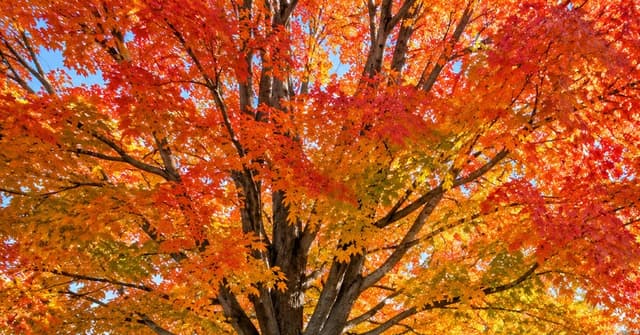
Maples are among the most recognizable trees in Grand Rapids, prized for their brilliant fall color and dense summer shade.
- Sugar maples tend to be slower growing with strong wood and a long lifespan, making them common in older, established neighborhoods.
- Red maples grow faster and tolerate a wider range of soil conditions, which has made them a popular replacement tree in newer landscaping.
- Both sugar maples & red maples benefit from pruning during their dormant season to reduce stress and lower the risk of excessive sap loss.
- Maples are also sensitive to soil compaction and root disturbance from nearby construction, so homeowners doing landscaping or driveway work near a mature maple should take care to protect the root zone.
- Silver maple, while less commonly planted today than in past decades, remains widespread in older Grand Rapids yards. It grows quickly and provides substantial shade in a relatively short time, but its wood is notably weaker than sugar or red maple, making regular inspection for cracked or hanging limbs especially important as these trees age.
Oaks: White, Red, and Bur Oak
Oaks are long-lived, structurally strong trees that are common throughout Grand Rapids parks and larger residential lots. White oak and bur oak tend to grow more slowly and develop a broad, spreading canopy over decades, while red oak grows somewhat faster with a more upright form.
- Oak wilt, a fungal disease that can spread through root grafts and beetle activity, is a regional concern. For this reason, arborists generally recommend avoiding oak pruning in late spring and early summer, when beetles that can spread the disease are most active.
- Oaks otherwise require relatively low maintenance once established, though older specimens should be periodically inspected for deadwood and cavity development.
- Oaks can live for well over a century, so many in Grand Rapids’ older neighborhoods and parks predate surrounding development. Preserving these mature trees matters because their shade, habitat, and canopy value cannot be quickly replaced by new plantings.
White Pine and Other Conifers
Eastern white pine is one of the more common conifers in West Michigan, valued for year-round screening, wind protection, and its soft, long needles. Unlike deciduous trees, pines generally should not be heavily pruned back into old wood, since they do not readily produce new growth from bare branches.
- Spruce and fir trees also appear throughout Grand Rapids landscapes, often planted as windbreaks or privacy screens. These conifers can be susceptible to needle diseases in wet years, and homeowners should watch for browning or thinning that doesn’t correspond to normal seasonal needle drop.
- Because conifers provide year-round screening rather than seasonal shade, they’re often placed strategically along property lines or near patios. Their dense, persistent foliage also means storm damage or dieback can be harder to spot at a glance, so periodic inspection is worthwhile even when a conifer appears green and full from a distance.
Ornamental and Flowering Trees
Crabapple, dogwood, and redbud trees are common ornamental choices in Grand Rapids yards, prized for spring flowers rather than shade or timber value.
- These smaller trees generally need lighter, more frequent pruning to maintain shape and remove crossing branches, along with attention to fungal issues like apple scab in wet springs.
- Because ornamental trees are typically planted closer to a home than large shade trees, their maintenance often factors into overall landscape design as much as tree health.
- Keeping these smaller trees well-shaped and disease-free tends to have a noticeable effect on a property’s curb appeal, particularly during spring bloom season.
The Changing Grand Rapids Canopy
Emerald Ash Borer (EAD) has significantly reduced the number of mature ash trees throughout Grand Rapids and the broader region over the past two decades. This has led to many neighborhoods to replant with a wider mix of species to reduce future vulnerability to a single pest or disease.
- Shift toward greater species diversity is intended to make the urban forest more resilient overall, even as individual homeowners deal with the loss of large, established shade trees.
- For homeowners planning new plantings, choosing a mix of species suited to local soil and climate conditions, rather than relying on a single popular tree, helps protect against future large-scale losses.
- Newer regional concerns, including beech leaf disease and various invasive insects, continue to emerge, which is part of why ongoing awareness of tree health, rather than a one-time assessment, benefits both individual properties and the broader Grand Rapids canopy.
Big Chipper Tree Service helps Grand Rapids homeowners care for the different tree species found across West Michigan properties. Our team can assess tree species, health, structural condition, and signs of pests or disease.
Big Chipper Tree Service’ ISA-certified arborists can recommend pruning practices suited to specific trees, including maples, oaks, pines, and ornamental varieties. Regular inspections can also help identify deadwood, weak branches, and other issues before they become safety concerns.
For damaged or declining trees, we can determine whether pruning or removal is the appropriate solution. Big Chipper Tree Service also helps homeowners develop ongoing maintenance plans that support healthy, diverse tree growth over time.
Frequently Asked Questions About Common Trees in Grand Rapids, MI
What is the most common large shade tree in Grand Rapids?
Sugar maple and various oak species are among the most common large shade trees in established Grand Rapids neighborhoods, prized for their size, longevity, and fall color.
When should oak trees be pruned to avoid oak wilt risk?
Oak pruning is generally best done in late fall or winter, avoiding the spring and early summer months when beetles capable of spreading oak wilt are most active.
Why have ash trees become less common in Grand Rapids?
Emerald ash borer, an invasive beetle, has killed a large percentage of ash trees across Michigan over the past two decades, significantly reducing their presence in local landscapes.
Do pine trees need the same pruning as maple or oak trees?
No. Conifers like white pine generally should not be cut back into bare, older wood, since they don’t reliably regenerate new growth the way deciduous trees do.
How can Big Chipper help identify the trees on my property?
Big Chipper’s crews can assess species, health, and structural condition on site and recommend a maintenance schedule suited to the specific trees on a property.
Summary Checklist: Grand Rapids Common Tree Identification & Care
| Evaluation Area | What to Confirm |
| Species identification | Type, age, and general health of each tree on the property |
| Pruning timing | Correct dormant or seasonal window for the species |
| Pest and disease risk | Known regional threats such as oak wilt or emerald ash borer |
| Root zone protection | Impact of nearby construction, grading, or paving |
| Canopy diversity | Mix of species to reduce vulnerability to a single pest |
| Structural condition | Deadwood, cavities, or weak unions in mature trees |
| Maintenance plan | Ongoing schedule for pruning, inspection, and care |
Final Advice
Grand Rapids has a diverse mix of trees, and each species requires care suited to its growth habits, condition, and local risks. Homeowners should avoid using the same pruning or maintenance approach for every tree. Regular inspections can help identify pest issues, structural weaknesses, and declining branches before they become larger problems. When planting new trees, choosing a diverse mix of species can also help reduce the impact of future pest or disease outbreaks.
Big Chipper Tree Service works with Grand Rapids homeowners to identify tree species, assess health, and build a maintenance plan suited to each property’s specific mix of trees.